
DeFi Swap Taxes Explained: Calculating FIFO LIFO HIFO for Uniswap Transactions 2026

Uniswap’s UNI token hovers at $3.52, reflecting a subtle 0.57% uptick over the past 24 hours with highs touching $3.55 and lows dipping to $3.31. This stability masks the frenzy of DeFi swaps fueling the protocol’s dominance, where traders exchange billions in tokens daily without a central gatekeeper. Yet for U. S. investors, each DeFi swap taxes calculation hinges on IRS rules treating crypto as property, turning every token trade into a potential capital gains showdown. In 2026, as regulatory scrutiny intensifies with Form 1099-DA looming, mastering uniswap tax calculation via FIFO, LIFO, or HIFO isn’t optional; it’s your shield against audits and penalties.

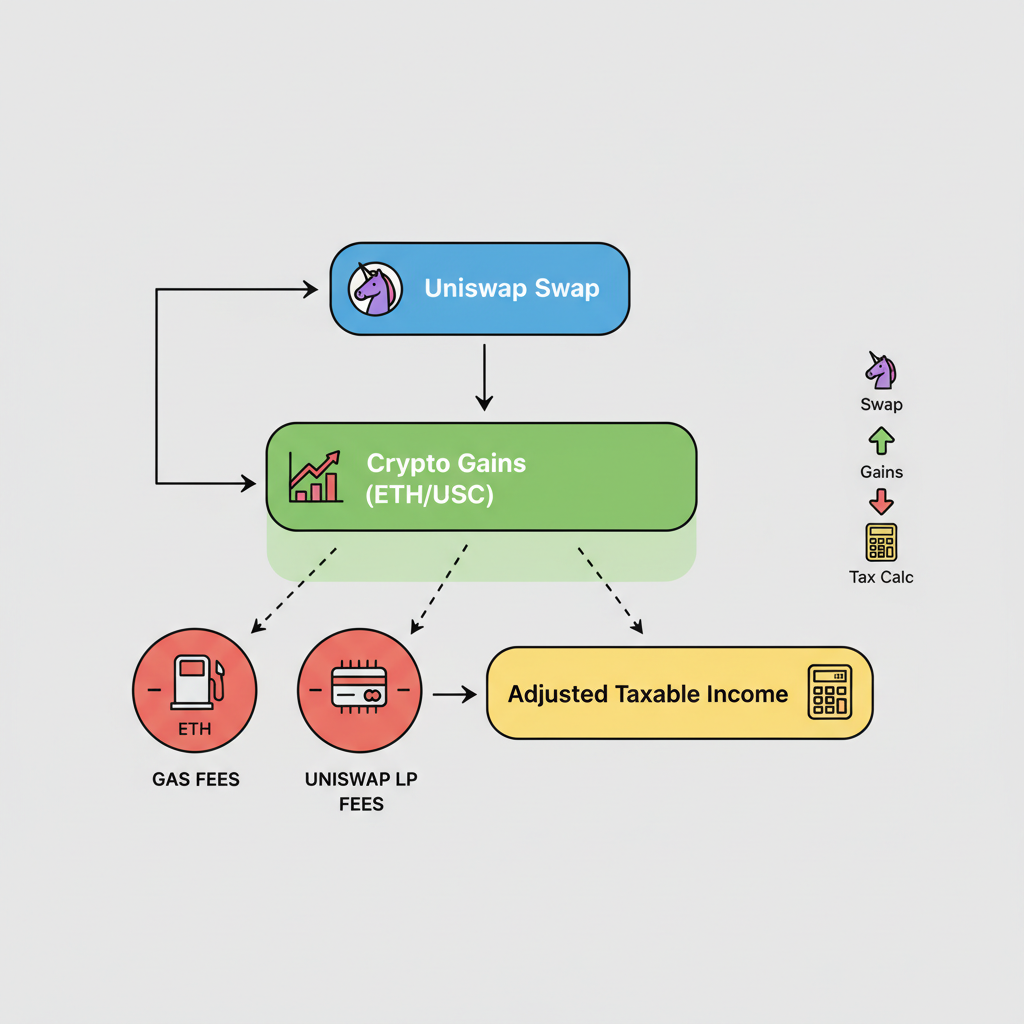
DeFi platforms like Uniswap exemplify freedom in trading, but freedom comes with fiscal strings. Swapping ETH for DAI or UNI for USDC? That’s a disposal event per IRS Notice 2014-21, crystallized in recent guidance. The agency views it as selling one asset to buy another, obligating you to tally fair market value proceeds against your cost basis. Gas fees paid in ETH add another layer, often deductible yet triggering micro-gains or losses. Ignore this, and you’re courting underreporting risks amid broker reporting mandates ramping up in 2026.
Uniswap Swaps as Taxable Events: No Escaping the IRS Net
Picture this: you swap 1 ETH bought at $2,000 for 3,000 USDC when ETH hits $3,500. Bam, a $1,500 short-term gain if held under a year. DEX trades lack 1099s today, but 2026 brings digital asset brokers under the microscope, potentially including Uniswap via frontend operators. Every liquidity add, removal, or flash swap profit counts too. My two decades tracking macro shifts affirm: crypto swap tax 2026 compliance starts with transaction logs from wallets like MetaMask or Etherscan exports. Stablecoin swaps aren’t immune; even USDT-to-USDC flips demand basis tracking if acquired costs differ.
Fees complicate matters further. That 0.05 ETH gas burn? Dispose of its basis, claim the loss, and deduct against income. Platforms overlook this, inflating your liability. Proactive traders use tools optimizing for these nuances, ensuring defi transaction cost basis accuracy from block zero.
Dissecting FIFO, LIFO, and HIFO: Choose Your Cost Basis Weapon Wisely
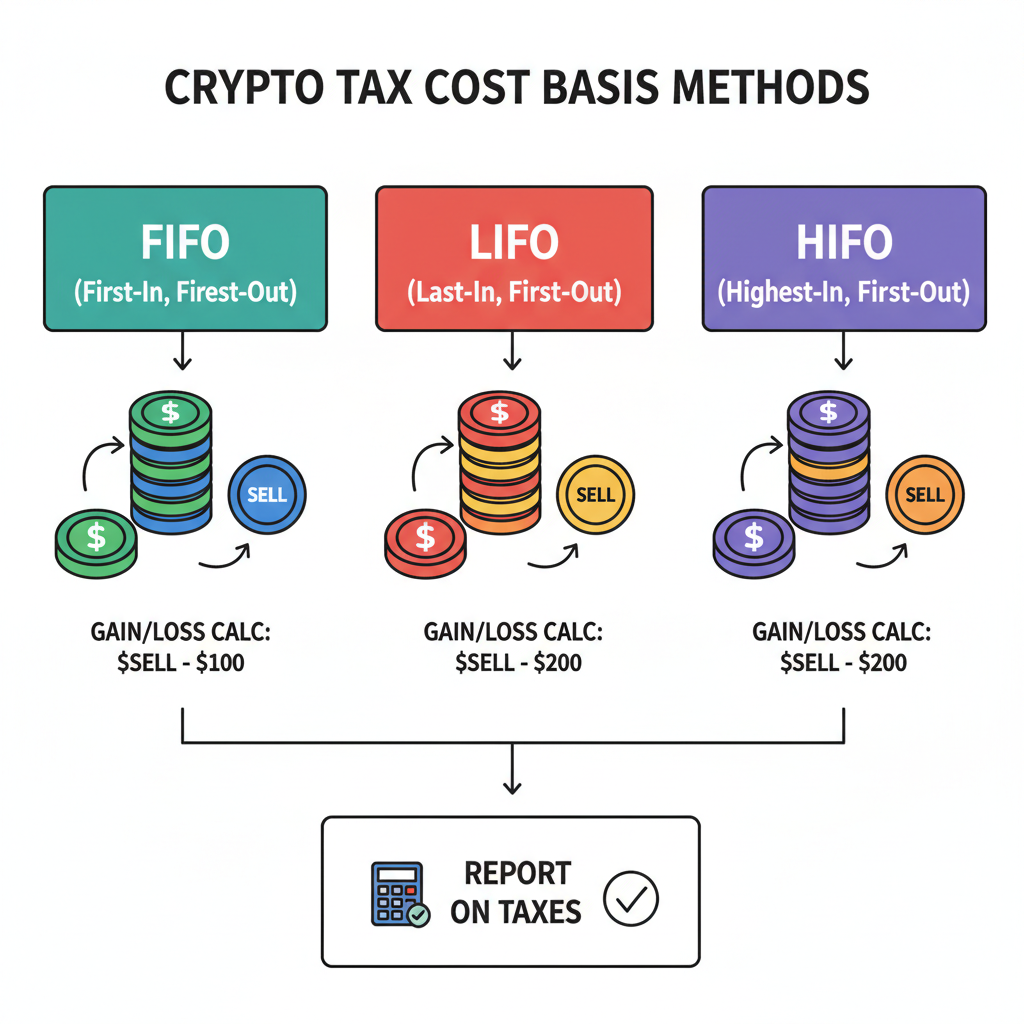
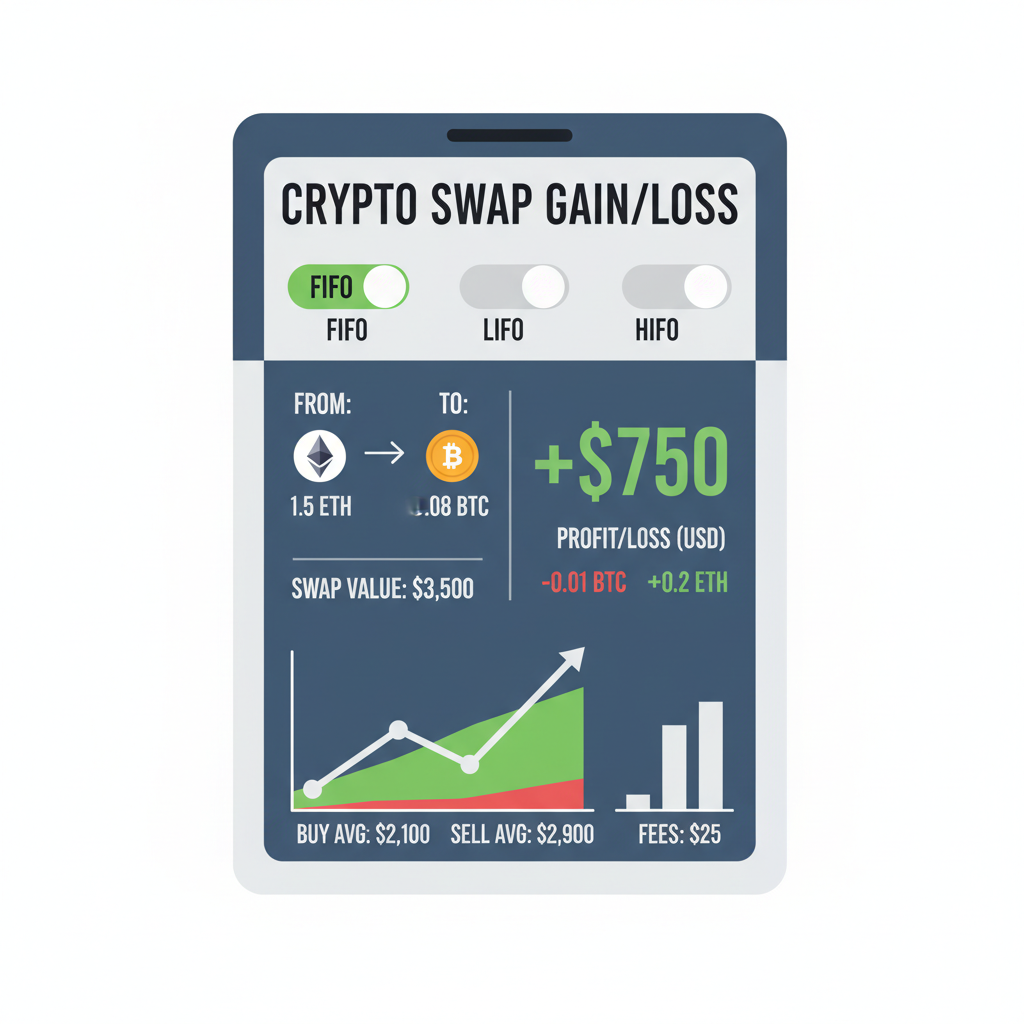
Here’s where strategy shines in fifo lifo hifo defi battles. The IRS defaults to FIFO, First-In, First-Out, matching oldest units sold first. Conservative? Absolutely, but in bull markets like UNI’s climb to $3.52, it pumps long-term gains from early buys, hiking your bill if prices soared. I’ve seen portfolios crushed by FIFO during 2021’s peak, only to rebound smarter.
LIFO, Last-In, First-Out, flips the script, depleting newest acquisitions first. Ideal when recent buys at peaks (say, UNI at $3.55 high) pair with lower-value disposals, deferring gains. Yet short-term rates sting if trades span under 365 days, and some states shun it. HIFO, Highest-In, First-Out, my tactical favorite for volatility, sells priciest lots first, slashing reportable gains maximally. Requires ironclad records proving identification, as IRS Form 8949 demands specifics. Camuso CPA notes only FIFO and Specific ID hold universally, but software like ours at NFT Tax Pro crunches HIFO legally where documented.
Uniswap (UNI) Price Prediction 2027-2032
Bullish and bearish scenarios influenced by DeFi volume growth, tax compliance trends, and market cycles (baseline: $3.52 end-2026)
| Year | Minimum Price (Bearish) | Average Price | Maximum Price (Bullish) |
|---|---|---|---|
| 2027 | $2.80 | $6.50 | $12.00 |
| 2028 | $3.50 | $9.20 | $18.50 |
| 2029 | $5.00 | $14.00 | $26.00 |
| 2030 | $7.20 | $20.50 | $36.00 |
| 2031 | $10.00 | $28.00 | $50.00 |
| 2032 | $12.50 | $36.00 | $65.00 |
Price Prediction Summary
UNI price is projected to grow progressively from its 2026 baseline of $3.52, with average prices potentially reaching $36 by 2032 amid rising DeFi adoption. Bearish mins reflect tax burdens and competition, while bullish maxes assume DeFi volume surges and regulatory clarity, implying up to 18x gains in optimistic cycles.
Key Factors Affecting Uniswap Price
- DeFi transaction volume on Uniswap driving fee revenue and UNI burns
- Tax reporting advancements (FIFO/LIFO/HIFO) reducing compliance friction and boosting user adoption
- Regulatory developments clarifying DEX swaps as taxable events, potentially stabilizing markets
- Uniswap protocol upgrades (e.g., v4) enhancing efficiency and TVL
- Crypto market cycles, Bitcoin halving effects, and competition from Solana DEXes like Jupiter
- Overall market cap expansion for layer-1/2 ecosystems supporting UNI’s utility
Disclaimer: Cryptocurrency price predictions are speculative and based on current market analysis.
Actual prices may vary significantly due to market volatility, regulatory changes, and other factors.
Always do your own research before making investment decisions.
Selecting demands portfolio depth. A FIFO purist stacks long-term holds; LIFO suits frequent traders riding dips; HIFO demands audit-proof trails. In practice, blend via Specific ID for cherry-picking, but default wisely, IRS audits favor consistency over after-the-fact switches.
Step-by-Step: Applying FIFO LIFO HIFO to a Uniswap ETH Swap
Let’s crunch numbers. You hold ETH lots: 1 at $1,800 (Jan 2025), 1 at $3,200 (Dec 2025), 1 at $3,400 (Feb 2026). Swap 2 ETH for UNI at $3.52 FMV when ETH fetches $3,500.
- FIFO: Sells Jan ($1,800) and Dec ($3,200) = $5,000 basis. Proceeds $7,000. Gain: $2,000.
- LIFO: Sells Feb ($3,400) and Dec ($3,200) = $6,600 basis. Gain: $400.
- HIFO: Sells Feb ($3,400) and Jan ($1,800, wait no, highest first: Feb $3,400 and Dec $3,200? Wait, HIFO prioritizes highest cost: Feb $3,400 and next highest Dec $3,200 = $6,600. Gain: $400. (Adjust for true HIFO minimizing gain. )
Refine: True HIFO sells highest costs to minimize gain, so pair with low proceeds if possible, but here it aligns with LIFO. Point: methods diverge sharply in layered portfolios, demanding real-time tracking as UNI fluctuates around $3.52.
Real-world portfolios rarely align so neatly, amplifying divergences. Suppose your ETH stack includes a long-term hold from 2024 at $1,200 amid UNI’s steady $3.52 perch. FIFO drags that low basis into the swap, inflating gains to long-term status if over a year old, taxed at preferential rates up to 20% plus 3.8% NIIT for high earners. LIFO spares it, preserving cheap lots for future plays, but risks short-term hits at ordinary income rates topping 37%. HIFO surgically excises the $3,400 lot first, then $3,200, minimizing immediate tax drag while demanding timestamped proofs on Form 8949.
Comparison of FIFO, LIFO, HIFO for 2 ETH Uniswap Swap (ETH FMV $3,500, UNI FMV $3.52)
| Method | Basis Used | Gain/Loss | Tax Implications (Short/Long-Term Notes) |
|---|---|---|---|
| FIFO | 1 ETH @ $1,000 (LT, 2023-01-01) 1 ETH @ $3,200 (LT, 2024-12-01) |
$2,800 Gain (All LT) | Long-term rates (0-20%); FIFO is IRS default; higher gain but favorable LT rates |
| LIFO | 1 ETH @ $3,400 (ST, 2026-02-01) 1 ETH @ $3,100 (ST, 2026-01-01) |
$500 Gain (All ST) | Short-term ordinary income rates (10-37%); lower gain but higher rates; may not be IRS permitted |
| HIFO | 1 ETH @ $3,400 (ST, 2026-02-01) 1 ETH @ $3,200 (LT, 2024-12-01) |
$400 Gain ($100 ST + $300 LT) | Mixed ST/LT rates; minimizes gain; requires specific ID, may not be permitted standalone |
Over my 18 years dissecting macro trends, I’ve watched regulatory tides shift from benign neglect to Form 1099-DA’s granular reporting. DeFi’s anonymity crumbles as custodial wallets and DEX aggregators face broker designations. Koinly and CoinLedger guides underscore swaps as disposals, yet software bridges the gap, automating defi transaction cost basis across chains. Manual Etherscan parsing? Feasible for pros, folly for most amid 2026’s volatility.
Gas Fees and Nuances: The Hidden Tax Multipliers in Every Swap
Don’t sleep on Ethereum gas, often 0.01-0.1 ETH per Uniswap trade. At $3,500 ETH, that’s $35-$350 vanished, but tax-wise, it’s a disposal. If your gas ETH basis sits at $2,500, pocket a $1,000 loss per 0.1 ETH to offset gains elsewhere. Deduct the USD value against proceeds on Schedule D, per IRS Pub 551. Liquidity mining rewards? Income at receipt, then basis for later swaps. Flash loans? Profit slices trigger ordinary income. These layers demand holistic tracking, where FIFO layers gas separately from principal swaps.
Calculate Uniswap Swap Taxes: FIFO, LIFO, HIFO Step-by-Step
Opinion: LIFO tempts in choppy markets like UNI’s 24-hour $3.31-$3.55 swing, matching high-cost recent buys to current disposals. Yet HIFO’s precision suits DeFi whales optimizing yields, provided records withstand audit. FIFO? The IRS safety net, but strategically suboptimal without Specific ID overlays. My conservative lens prioritizes documentation over aggression; one sloppy HIFO claim invites full portfolio scrutiny.
Reporting Roadmap: From Swap to Schedule D in 2026
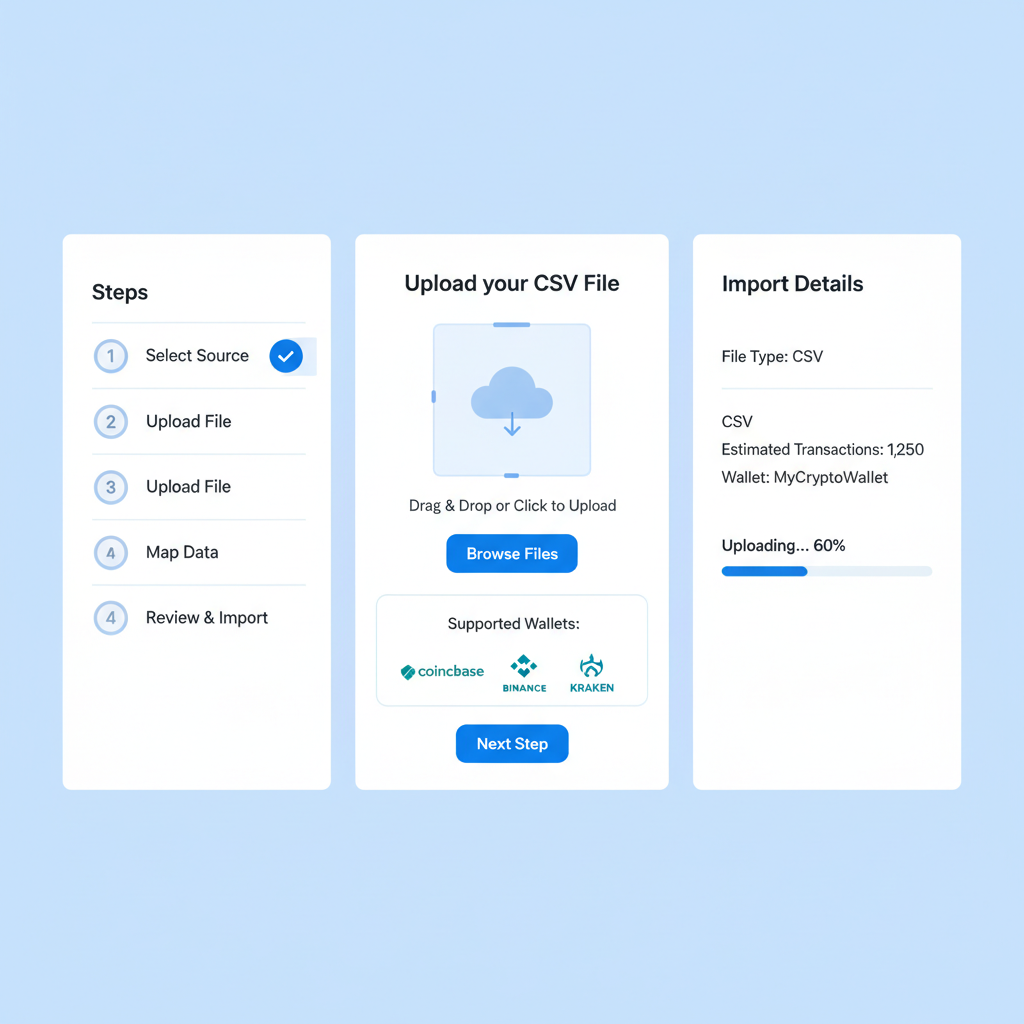
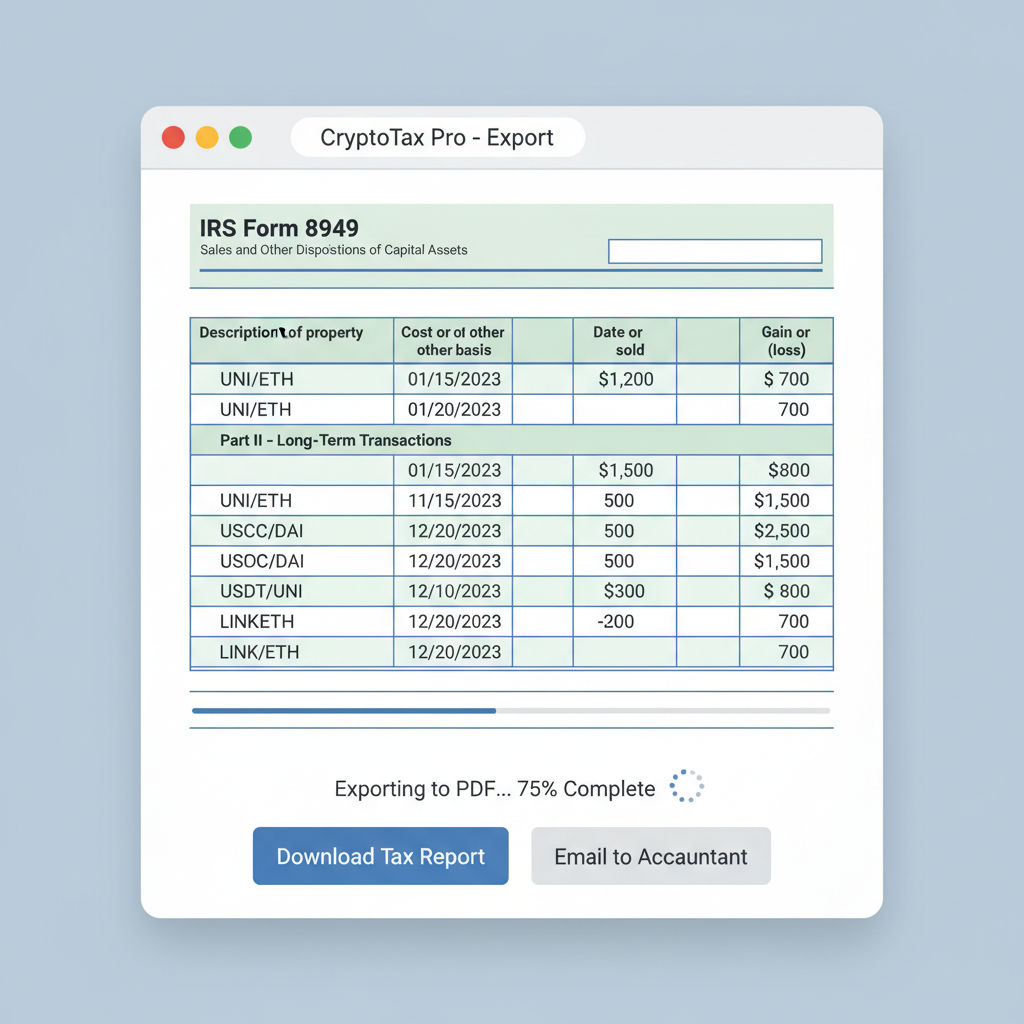
Harvest your TheGraph or Dune Analytics exports, feed into calculators supporting fifo lifo hifo defi. Generate CSV for TurboTax or pro software, detailing date acquired, date sold, proceeds, cost basis, adjustment codes. Short-term gains stack on Form 8949 Part I; long-term Part II. Totals flow to Schedule D, then 1040. Amid 1099-DA’s debut, discrepancies scream red flags. Tools like NFT Tax Pro at nfttaxpro. com real-time crunch these, FIFO-defaulting yet HIFO-flexible for compliant minimalism, tracking UNI at $3.52 amid DeFi’s $100B and TVL.
Traders thriving in 2026 blend methods per asset, FIFO for BTC holds, HIFO for altcoin flips. Regulatory headwinds from OECD CARF harmonize global reporting, but U. S. leads with property treatment. Proactive basis management isn’t just compliance; it’s alpha in volatile seas where UNI’s $3.52 stability belies swap frenzy. Master these, and crypto swap tax 2026 becomes a calculated edge, not existential dread.