

UK DeFi Tax 2026 No Gain No Loss Rules: Calculate Lending Pool Deposits with FIFO HIFO Tools

As UK DeFi traders gear up for 2026, the proposed no gain no loss (NGNL) rules promise to reshape how we handle lending pool deposits and staking rewards. Imagine depositing ETH into an Aave pool without triggering immediate capital gains tax; that’s the reality HMRC is crafting. This shift sidesteps the punitive ‘dry tax’ traps that have plagued high-frequency DeFi users, where even non-economic transfers sparked taxable events. With volatility in crypto markets, deferring gains until actual sales aligns tax logic with economic substance, a win for precision-minded investors.

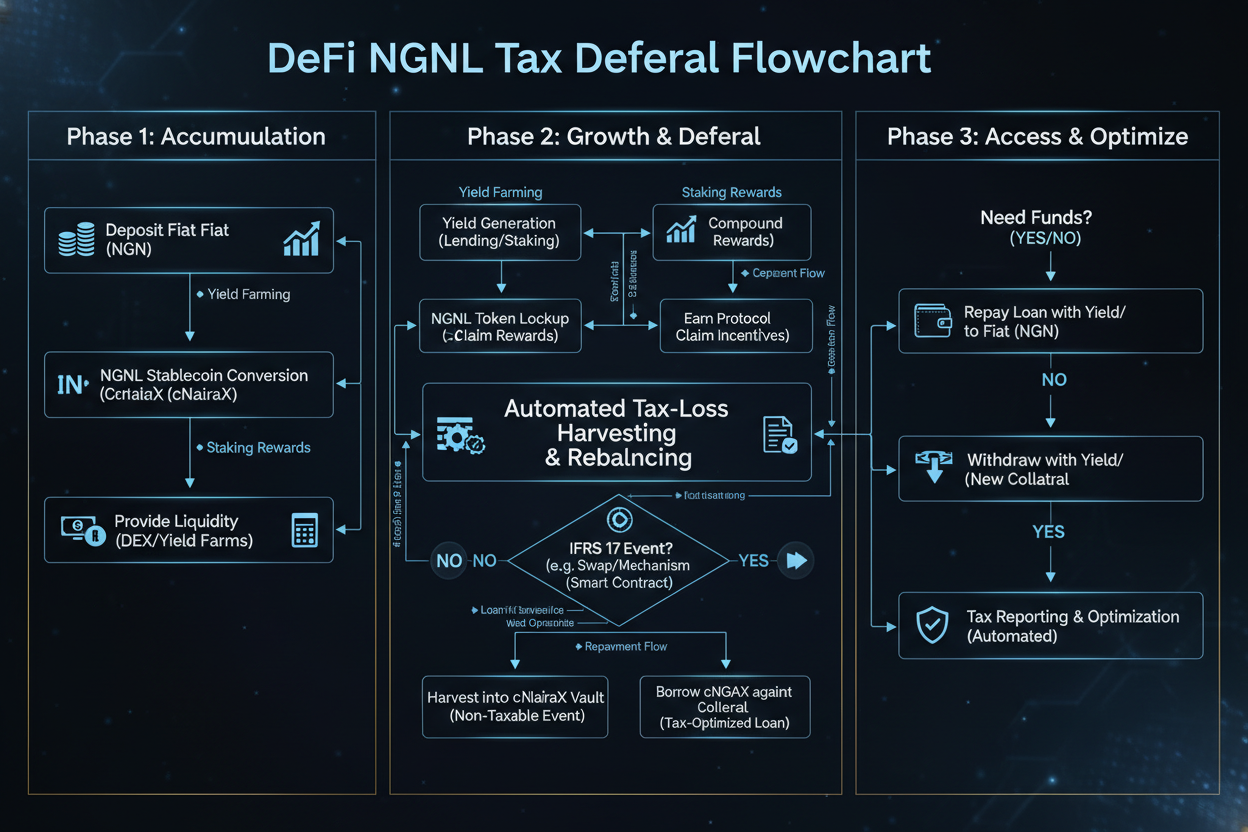
HMRC’s November 2025 consultation outcome marks a pivotal turn. Previously, depositing tokens into liquidity pools or lending protocols often qualified as disposals under capital gains tax (CGT) rules, forcing calculations on unrealized positions. Now, NGNL treatment defers liability until you economically dispose of assets, like selling withdrawn tokens. This targets lending, staking, and liquidity provision, sparing users from phantom taxes on reward accruals.
Decoding NGNL: What Qualifies as a Non-Taxable DeFi Move
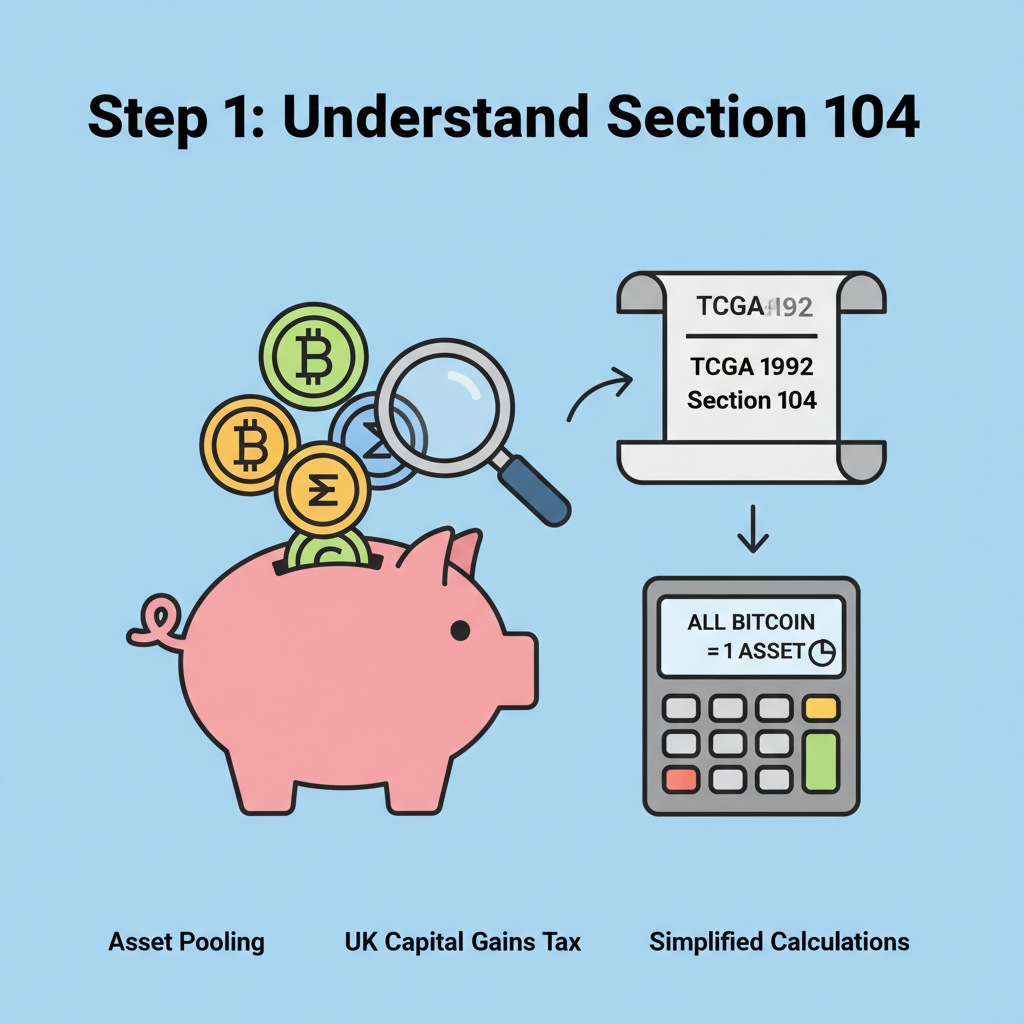
The core of NGNL lies in redefining disposals. Per GOV. UK guidance, entering DeFi arrangements via lending or staking won’t count as taxable if no economic risk transfers occur. Your cost basis carries over intact. Withdrawals mirror deposits at acquisition value, with gains crystallized only on subsequent sales or swaps. This pooling continuity under Section 104 ensures averaged cost bases persist through DeFi cycles.
HMRC’s approach reduces administrative burdens and avoids tax outcomes that don’t reflect economic reality.
Critically, this isn’t a free pass; complex impermanent loss in liquidity pools demands vigilant tracking. Yet for straightforward lending, like supplying USDC to earn yields, NGNL eliminates mid-stream CGT hits. Data from Deloitte’s TaxScape highlights how pre-2026 rules deterred UK participation in protocols like Aave, potentially curbing a crypto boom as noted by Aave’s CEO.
Section 104 Pooling: UK’s Cost Basis Method for DeFi Gains
Unlike US-style FIFO or HIFO, UK crypto tax mandates Section 104 pooling for identical assets. All holdings of, say, ETH form one pool; allowable costs average across purchases. When NGNL-deferred disposals hit, pull from this pool for gain math: proceeds minus pooled cost basis, adjusted for inflation if held over a year.
Section 104 vs FIFO/HIFO: Key Differences
-
1. Averaging vs Specific Identification: Section 104 pools and averages costs across all holdings of the same cryptoasset; FIFO/HIFO allow identifying specific acquisition units (HMRC Crypto Manual).
-

2. Simpler for High-Volume Trades: Pooling eliminates need to track individual lots, ideal for frequent DeFi transactions vs complex FIFO/HIFO records.
-
3. No Cherry-Picking High Costs: Section 104 prohibits selecting high-cost basis like HIFO to minimize gains; uses average instead.
-

4. Mandatory for UK Crypto per HMRC: Section 104 pooling required for cryptoassets; FIFO/HIFO not allowed (Crypto Tax Hub).
-
5. Supports DeFi Deferrals Seamlessly: Aligns with proposed NGNL rules for lending/staking, deferring tax using pooled basis until disposal (GOV.UK).
This method suits DeFi’s churn. Tools like UK DeFi tax calculators now adapt FIFO/HIFO simulations for comparison, but compliance demands Section 104 outputs. For lending pool deposits, log entry values pre-NGNL; post-withdrawal, allocate pool share proportionally. Precision here maximizes deductions, especially with yield-on-yield compounding.
Calculating Lending Pool Deposits: Step-by-Step Under New Rules
Start with acquisition: Track each token’s cost via exchange records or wallet exports. Pool under Section 104 upon matching assets. Depositing into a lending pool? NGNL flags it non-disposal; base cost transfers. Rewards accrue as new pool entries at fair market value receipt date.
Withdrawal scenario: Retrieve principal at original pooled cost; gains deferred. Sell post-withdrawal? Compute: Sale proceeds – (pooled cost x units sold/total pool units). HMRC’s DeFi focus ensures staking rewards pool separately if distinct, but lending principal maintains continuity.
Real-world edge: High-frequency traders benefit most. A 2025 CoinDesk analysis pegged pre-NGNL tax drags at 20-30% effective rates on yields alone. Post-2026, HMRC DeFi staking rules via NGNL could unlock billions in retained capital for reinvestment.
Impermanent loss adds nuance; in automated market makers, pool shares diverge from held assets, but NGNL preserves base cost until exit. Tools must model this divergence precisely, apportioning pool costs to withdrawn LP tokens. My 15 years charting markets affirm: accurate basis tracking turns tax drag into strategic edge.
Practical Example: Lending Pool Math Under Section 104
Suppose you hold 10 ETH bought at averaged £2,000 per unit in your Section 104 pool. Deposit 5 ETH into Aave lending pool: NGNL defers CGT, pool shrinks to 5 ETH at £2,000 base. Earn 0.5 ETH rewards, added to pool at receipt FMV, say £2,500/unit. Withdraw 5.5 ETH principal/rewards: still NGNL, full pool withdraws intact. Sell 3 ETH later at £3,000/unit: gain = (3 x £3,000) – (3/5.5 x total pool cost). This proportional slice demands software rigor; manual errors compound in DeFi velocity.
UK DeFi NGNL: Calculate Section 104 Pooled Basis for Lending Deposits
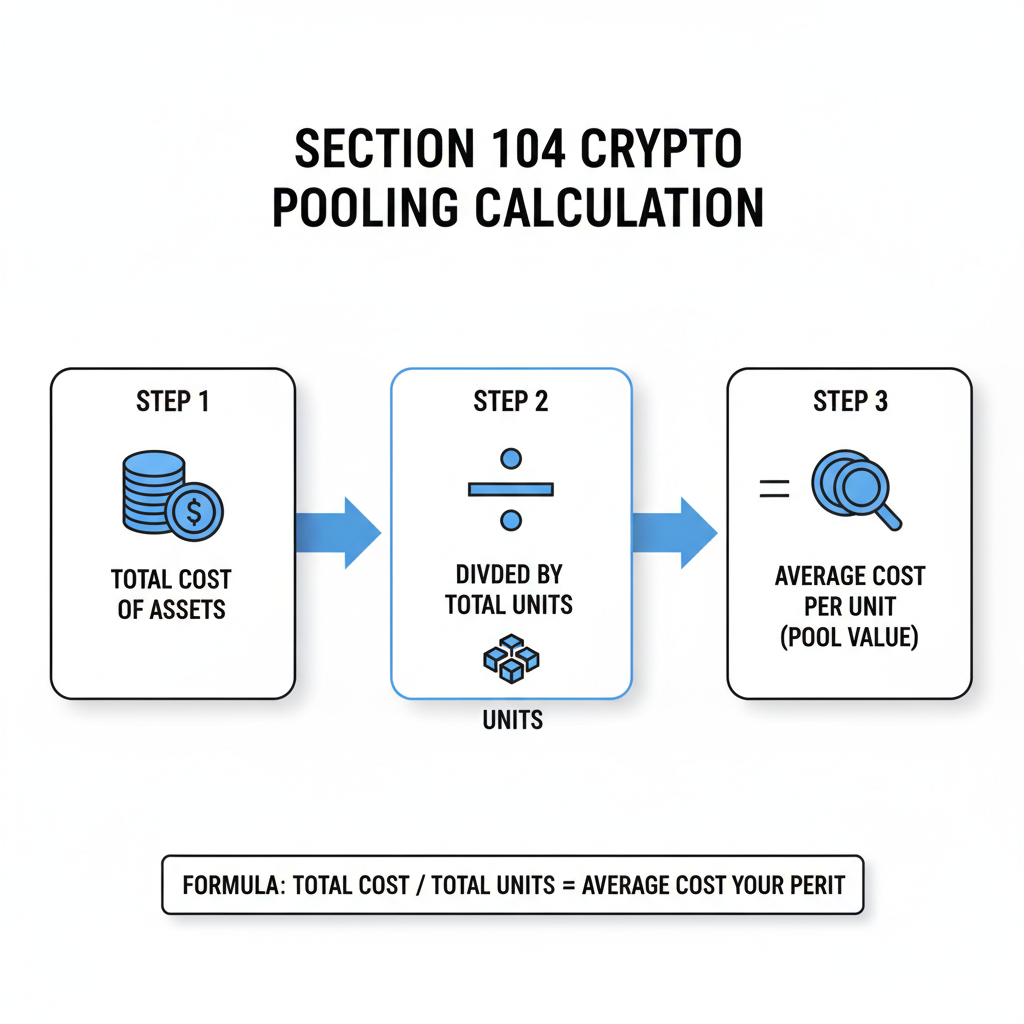
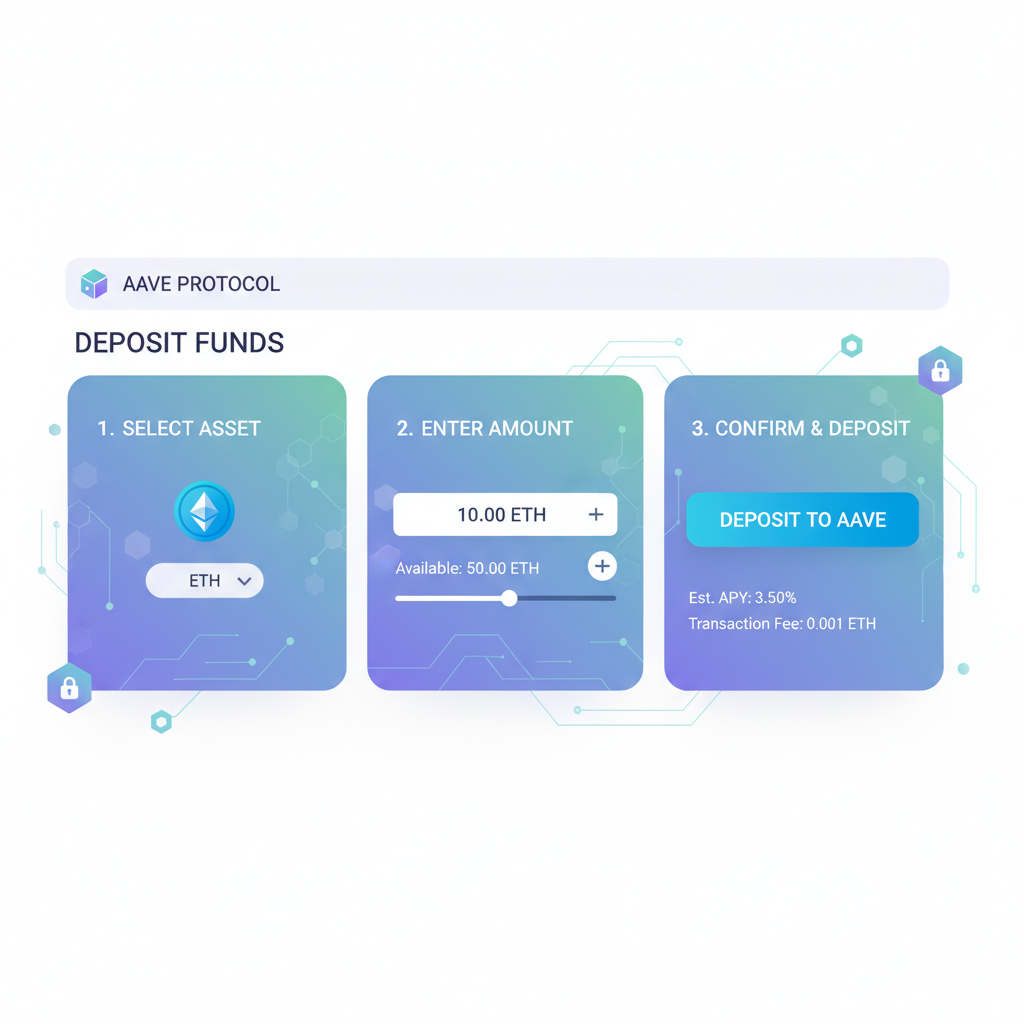

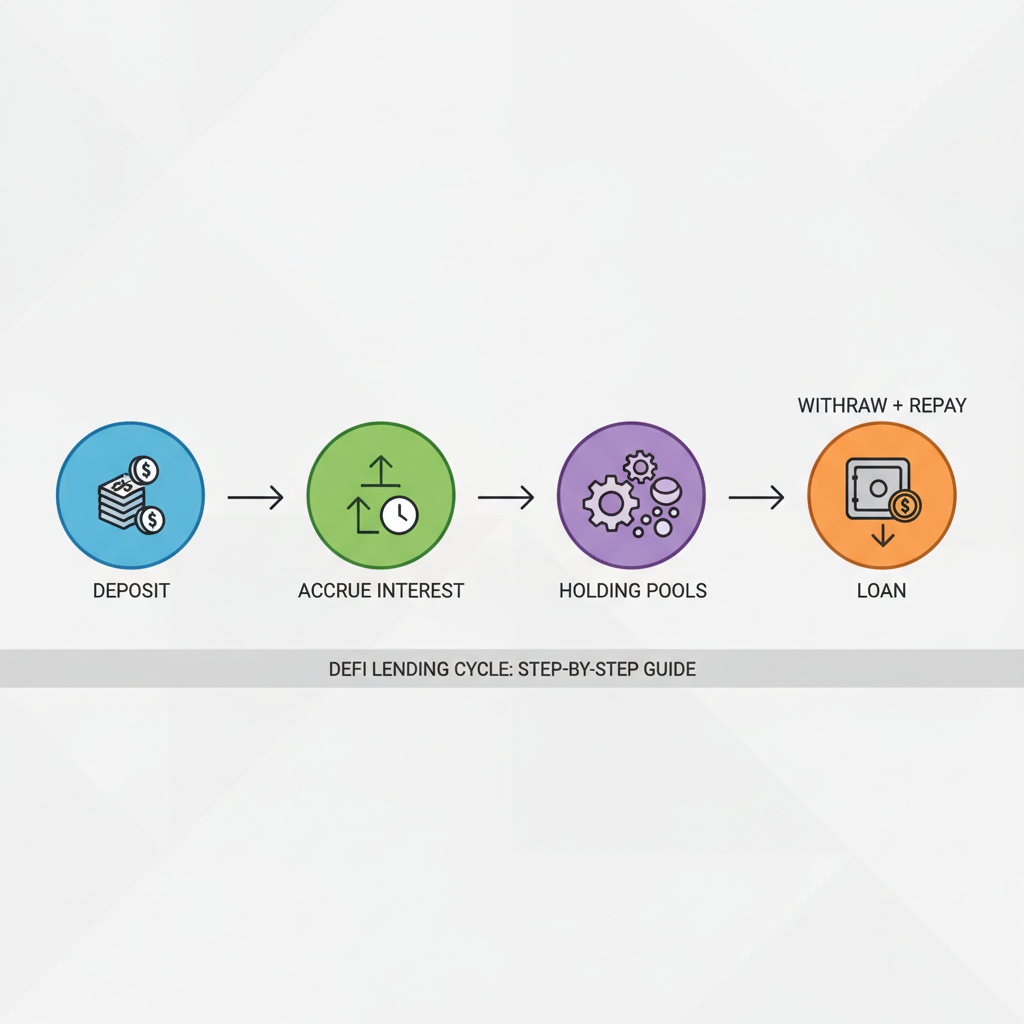
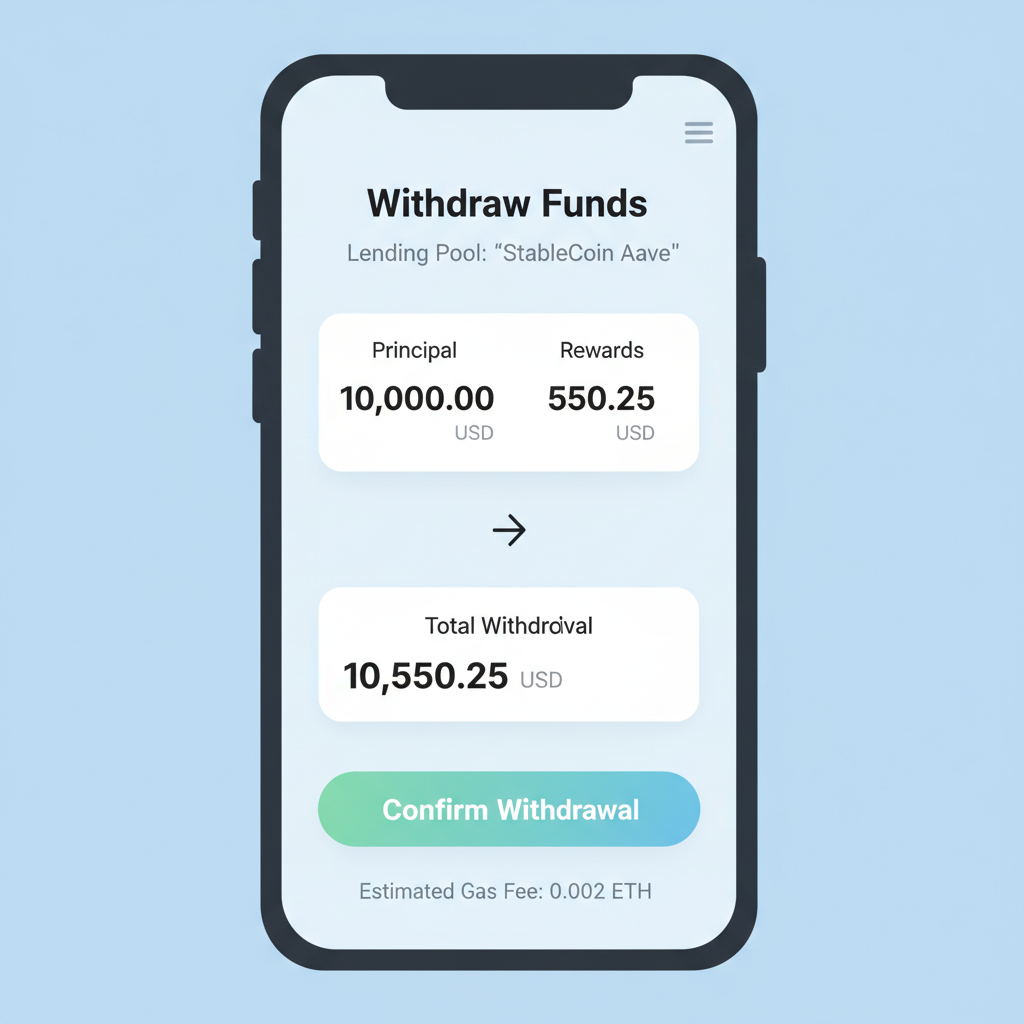
Such computations expose why FIFO HIFO crypto calculator UK adaptations matter. While mandatory Section 104 averages, simulators reveal HIFO’s potential savings – up to 15% on gains per backtests on volatile assets like SOL. For compliance, export Section 104 reports; for optimization, benchmark alternatives. HMRC audits favor documented pools, underscoring tool necessity.
NGNL vs Pre-2026: Tax Impact Table for Aave Lending
Pre-2026 vs NGNL 2026: Tax Comparison for 10 ETH DeFi Lending Pool Deposit (Section 104 Pooling)
| Step | Pre-2026 Tax Treatment | NGNL 2026 Tax Treatment |
|---|---|---|
| Initial Pool (Section 104) | 10 ETH @ £2,000 avg (£20,000 total) | 10 ETH @ £2,000 avg (£20,000 total) |
| Deposit 10 ETH (MV £3,000/ETH) | Taxable disposal\nGain: 10 × (£3,000 – £2,000) = £10,000 CGT immediate\nPool depleted to 0 ETH | No Gain/No Loss\nNo CGT\nPool unchanged: 10 ETH (£20,000 total) |
| Withdrawal 10 ETH principal (MV £3,000/ETH) + 1 ETH rewards (£2,500) | New acquisitions added to pool:\n10 ETH @ £30,000 total cost\n1 ETH @ £2,500\nPool: 11 ETH (£32,500 total cost) | Principal: No Gain/No Loss, no CGT\nRewards: new acquisition 1 ETH @ £2,500 added to pool\nPool: 11 ETH (£22,500 total cost) |
| Final Sale: 11 ETH @ £3,000/ETH (£33,000 proceeds) | CGT gain: £33,000 – £32,500 = £500 | CGT gain: £33,000 – £22,500 = £10,500 |
| Total Tax Outcome | £10,000 (deposit) + £500 (sale) = £10,500\n(partial upfront CGT hit) | £10,500 (sale only)\n(fully deferred to economic disposal) |
This table crystallizes the relief: pre-rules, deposit alone triggers ~£5,000 CGT on 5 ETH uplift; NGNL shifts full ~£8,500 gain to sale, indexed for inflation. Aave lending tax 2026 transforms from burden to boon, per CEO optimism on UK crypto surge.
DeFi liquidity pool taxes follow suit, with NGNL shielding LP deposits. Yet rewards and IL require granular logs: entry/exit values, share ratios. Section 104 pools LP tokens separately if fungible, merging on redemption. High-frequency yield farmers, watch composability – nested pools may chain deferrals, but breaks on swaps demand gain realization.
Opinion from the trenches: NGNL rectifies HMRC’s prior overreach, yet pooling’s averaging dulls HIFO’s edge on rising markets. Deploy UK DeFi tax calculator for real-time pools; our platform at NFT Tax Pro ingests wallet data, simulates DeFi flows, outputs HMRC-ready CSVs with Section 104 primacy and FIFO/HIFO what-ifs. Track Aave supplies, Compound borrows, Uniswap LPs seamlessly.
Forward scan: 2026 implementation likely refines via Autumn Budget, targeting January effective. Early adopters gain; test runs now via tools reveal exposures. Charts signal ETH eyeing £4,000; defer taxes, compound yields, dominate DeFi. Taxes bite less when calculated right.