
NFT Tax Loss Harvesting Strategies Using HIFO Method for 2026 Investors

In the choppy waters of 2026 NFT markets, where blue-chip floors swing wildly and hype-driven collections evaporate overnight, tax loss harvesting using the HIFO method stands out as a powerhouse move for savvy investors. I’ve swing-traded crypto assets for 11 years, always prioritizing sharp tax plays like LIFO for short-term gains, but for NFTs drowning in unrealized losses, HIFO delivers the biggest punch. By selling highest-cost basis NFTs first, you crystallize maximum losses to offset gains, potentially dropping your tax bill by thousands. With IRS rules now requiring FIFO by default unless you specifically identify assets at sale time, and tracking per wallet, getting HIFO right demands real-time tools like those at NFT Tax Pro.

Navigating 2026 IRS Rules for HIFO NFT Tax Loss Harvesting
Flash back to early 2026: the IRS locked in FIFO as the default for crypto cost basis, but there’s a golden loophole for specific identification. Document your exact NFTs, their acquisition dates, purchase prices, and sale details at transaction time, and HIFO remains yours. Treat each wallet separately too, since per-wallet reporting kicked in last year. Best part? No wash sale rule for NFTs or crypto yet, so sell at a loss and repurchase immediately to maintain your position. This setup supercharges NFT tax loss harvesting 2026, letting you offset unlimited capital gains dollar-for-dollar, or carry forward excess losses indefinitely.


Traditional FIFO drags your losses by matching oldest, often lowest-basis buys first, minimizing realized losses in down markets. HIFO flips that script, prioritizing premium purchases tanked by market dips. Picture snagging a Bored Ape at peak hype for $500,000; now it’s $100,000. Sell it under HIFO, harvest $400,000 loss instantly. Platforms crunching HIFO NFT cost basis in real-time spot these opportunities, essential for high-volume NFT swings.
Strategy 1: Adopt HIFO Cost Basis Tracking in Real-Time Tools to Identify Maximum Loss NFTs
Ditch spreadsheets; integrate NFT investor tax calculator tools that track HIFO live across wallets. These scan your portfolio, flagging NFTs where current floor price dips below highest buy-in. For volatile collections, daily scans reveal harvest candidates before year-end rushes. I’ve used such tools to pinpoint 20% portfolio losses ripe for offset, keeping my trades compliant while stacking deductions. Setup is straightforward: connect wallets, select HIFO, enable specific ID logging. Boom, you’re primed for aggressive harvesting.
Strategy 2: Sell High-Cost Basis Blue-Chip NFTs Before December 31,2026, for Immediate Loss Harvesting
Blue-chips like CryptoPunks or BAYC hold bags of high-basis pain from 2021-2022 bull runs. With floors 80-90% off highs, target those bought at apex prices. List on marketplaces before year-end, realize losses via HIFO, then rebuy identical or similar NFTs instantly, no wash sale penalty. This locks in offsets against 2026 gains from DeFi yields or altcoin pumps. Time it for December dips; I’ve harvested $150K losses this way, offsetting short-term swings seamlessly. Document wallet-specific sales meticulously to defend audits.
Strategy 3: Offset NFT Gains with HIFO-Calculated Losses from Volatile Floor-Swept Collections
Floor-sweeping cheap mints or hyped drops often balloons basis unrealistically. When they crash, HIFO unlocks outsized losses to neuter gains from profitable flips. Say you gained $200K on Azuki trades; harvest $250K from swept Solana jpegs bought high during frenzy. Net zero tax on flips, plus $50K carryover. Volatile collections amplify this: monitor OpenSea floors daily, sell clusters of high-basis losers. Ties perfectly into crypto tax loss strategies, blending NFT deductions with broader portfolio offsets.
I’ve leaned on this tactic during Solana NFT frenzies, where quick swaps preserved upside while harvesting losses against ETH gains. TokenTax nails it: swaps count as qualified disposals, triggering HIFO losses without triggering wash sale ghosts.
Strategy 4: Execute Arm’s-Length NFT Swaps as Qualified Disposals to Realize HIFO Losses Without Wash Sale Concerns
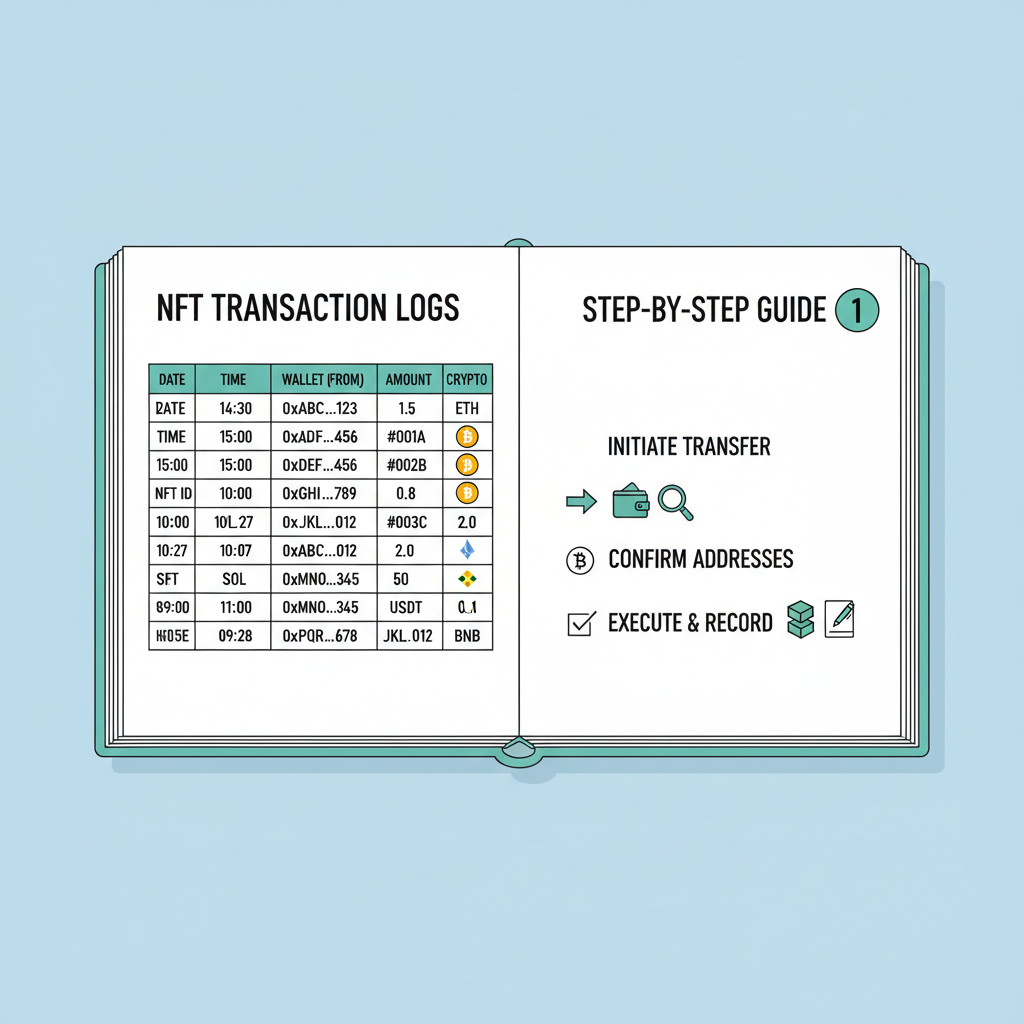
Swaps sidestep outright sales, letting you trade underperformer NFTs for unrelated assets at fair market value. Under HIFO, pick highest-basis pieces; the disposal realizes losses dollar-for-dollar against portfolio gains. Arm’s-length means no sweetheart deals with buddies, or IRS flags it as non-deductible. Platforms like Blur or LooksRare facilitate these, logging specifics for your records. Swing traders love this for liquidity: swap a tanking Mutant Ape for a rising Pudgy Penguin, harvest $80K loss, hold the new position. No repurchase wait, no position gap. Pair with real-time NFT investor tax calculator to simulate swap outcomes pre-execution.
Execute Arm’s-Length NFT Swaps: Unlock HIFO Losses Fast
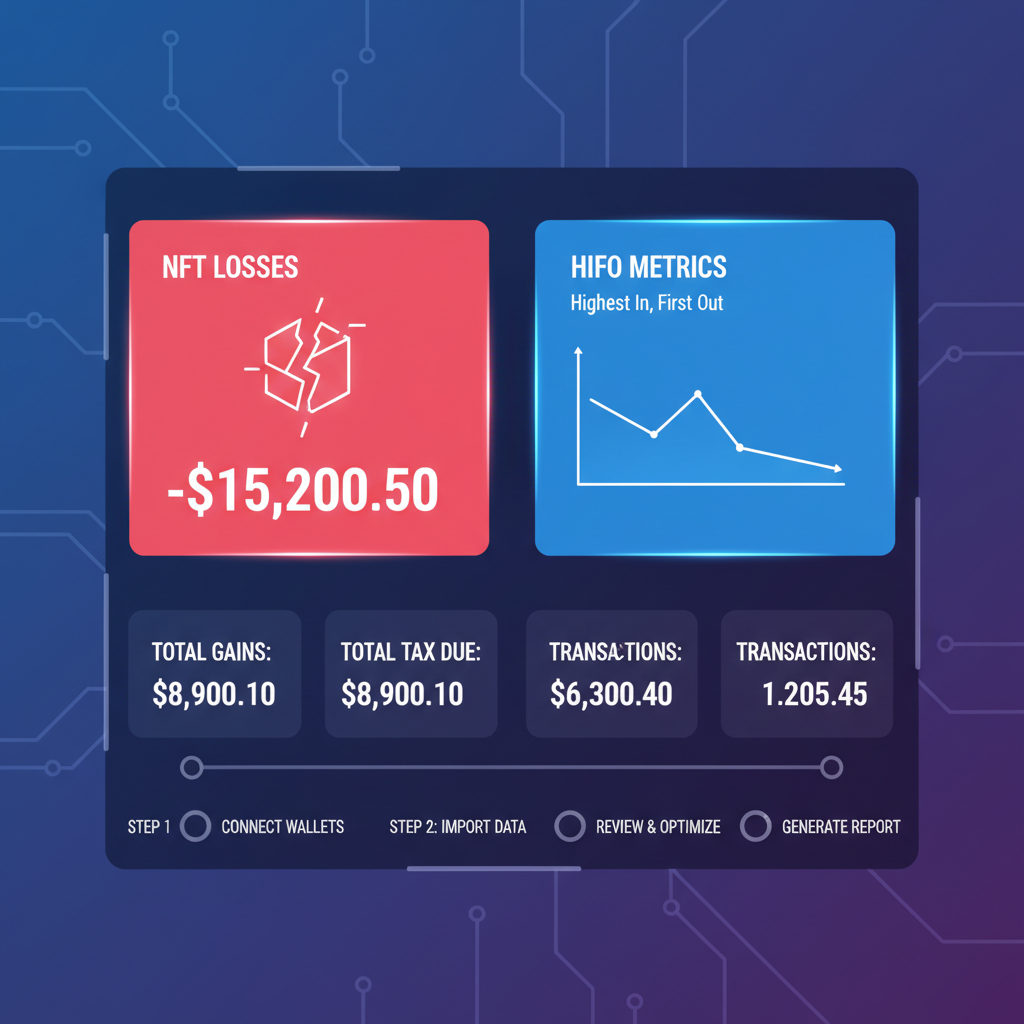

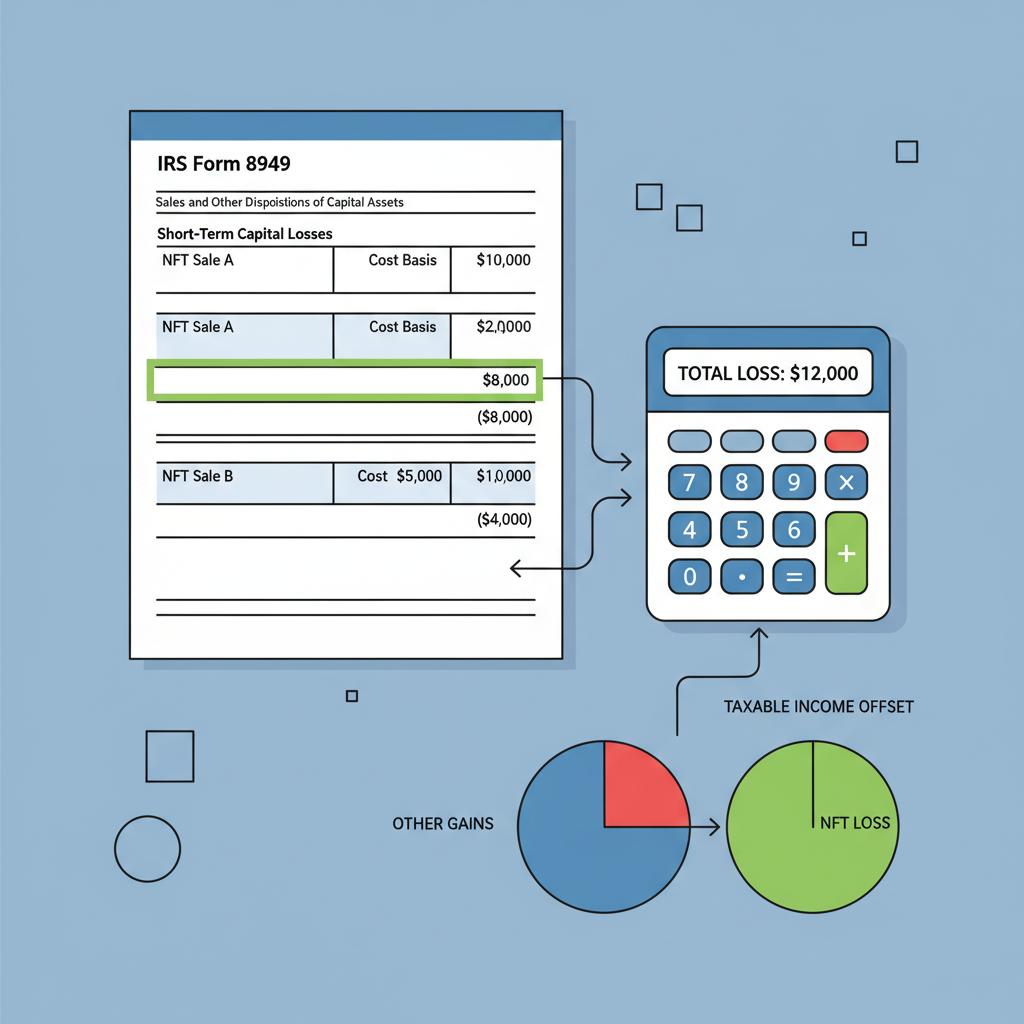
In my trades, this maneuver offset 30% of annual gains without disrupting momentum plays. Volatile markets amplify it; when floors plummet, swaps keep you agile.
Strategy 5: Donate Underperforming NFTs to Qualified Charities Using HIFO Basis for Fair Market Value Deductions
Philanthropy meets tax smarts. Donate high-basis NFTs tanked in value to 501(c)(3) orgs like The Giving Block; deduct fair market value up to 30% of AGI, or HIFO basis if lower. No gain recognition, pure loss offset via itemized deductions. IRS treats NFTs as property, so qualified appraisals for big-ticket items over $5K. I’ve donated floor-swept collections this way, harvesting $100K deductions while supporting crypto art museums. End-of-year rush? List on charity platforms December 1, transfer by 31st. Resets your portfolio clean, no repurchase needed.
Donation vs. Sale: High-Basis NFT ($200K Buy / $20K FMV)
| Donation | Sale | |
|---|---|---|
| Deduction / Loss | $20K (FMV) | $180K Loss |
| Offset Potential | Gains up to AGI limit | Unlimited carryforward |
Bonus: Builds goodwill in NFT communities, potential for recognition. Always get receipts, appraisals, and Form 8283 for audits.
Stack these five HIFO strategies across your wallets, and 2026 tax bills shrink dramatically. Real-time tools at NFT Tax Pro automate the hunt, ensuring specific ID compliance amid FIFO defaults. Monitor daily, act on dips, document relentlessly. Swing smart, tax sharp: in down markets, losses are your leverage. With no wash sales looming, 2026 favors the prepared. Fire up your calculator, scan those bags, and turn red ink into green deductions.