
Classify your NFTs correctly
The IRS treats NFTs as property, not currency. This classification means every sale, trade, or exchange triggers a taxable event. Your tax liability depends entirely on how you classify the asset and how long you held it. Misclassifying an art NFT as a utility token can lead to incorrect tax rates and unnecessary penalties.
Most NFTs fall into two categories: standard capital assets or collectibles. The distinction determines your maximum tax rate. Standard capital assets are taxed at 0%, 15%, or 20% for long-term holdings. Collectibles are taxed at a higher maximum rate of 28%.
| Category | Max Long-Term Rate | Typical Examples |
|---|---|---|
| Standard Capital Asset | 0% - 20% | Utility tokens, fractionalized real estate |
| Collectibles | 28% | Digital art, profile pictures (PFPs), domain names |
To determine your classification, look at the nature of the NFT. If the item is primarily for personal enjoyment or collection, such as digital art or profile pictures, the IRS likely views it as a collectible. If the NFT provides functional access to a platform or service, it may be treated as a standard capital asset.
Holding period also matters. If you hold the NFT for one year or less, gains are taxed as short-term capital gains, matching your ordinary income tax bracket. Holding for more than one year qualifies for long-term rates. Always keep records of your acquisition date and cost basis to support your classification.
Track cost basis for every transaction
Every time you acquire an NFT, you establish a cost basis. This number represents the fair market value (FMV) of the digital asset in U.S. dollars at the exact moment you received it. You need this figure to calculate your capital gains or losses when you eventually sell, trade, or swap the NFT.
The IRS treats NFTs as property, not currency. If you hold the asset for more than one year, you may qualify for long-term capital gains rates. However, some NFTs are classified as "collectibles," which are taxed at a maximum long-term rate of 28%. Accurate tracking prevents you from overpaying taxes or facing penalties during an audit. CoinTracking's 2026 NFT tax guide outlines how these valuations impact your final liability.
Follow this sequence to record your cost basis correctly:
Record the precise date and time of the transaction on the blockchain. This timestamp determines your holding period. If you acquired the NFT less than a year ago, any profit is taxed as short-term capital gains at your ordinary income rate. If you held it longer, you may qualify for lower long-term rates.
Find the dollar value of the NFT at the moment of acquisition. For purchases, this is the amount you paid. For airdrops or rewards, it is the FMV when you took control of the token. Use a reputable crypto tax calculator or exchange data to convert the value to USD. Do not estimate; use the actual transaction value.

Save the recorded FMV as your cost basis in your tax ledger. This number becomes your baseline for future calculations. When you dispose of the NFT, subtract this basis from the sale price to determine your gain or loss. Keep these records for at least three to seven years, depending on your state's statute of limitations.
Missing this data creates a significant problem. If you cannot prove your cost basis, the IRS may assume your entire sale price is taxable profit. This can lead to a much higher tax bill than you actually owe. Use dedicated NFT tax software to automate this tracking and ensure you never lose a transaction record.
Report taxable events in 2026
NFT Tax works best as a clear sequence: define the constraint, compare the realistic options, test the tradeoff, and choose the path with the fewest hidden costs. That order keeps the advice usable instead of decorative. After each step, pause long enough to check whether the recommendation still fits the reader's actual situation. If it depends on perfect timing, unusual access, or a best-case budget, include a simpler fallback.
The simplest way to use this section is to write down the real constraint first, compare each option against it, and choose the path that still works outside ideal conditions.
Handle staking and airdrop income
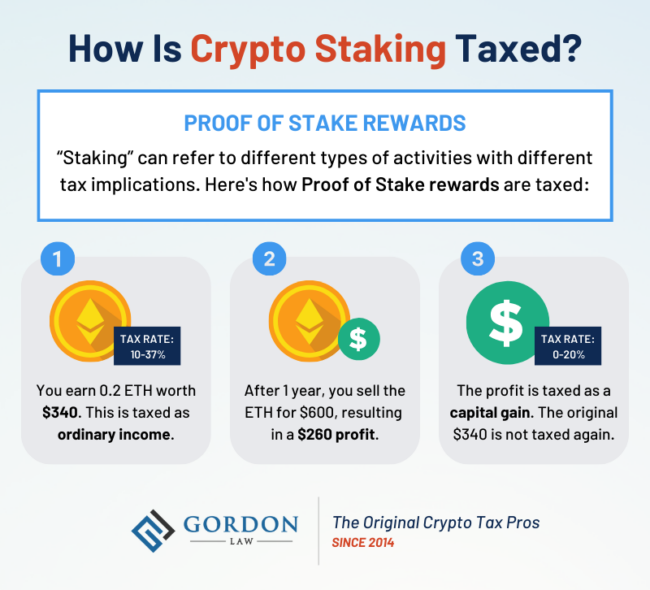
Staking rewards and airdrops are not capital gains; they are ordinary income taxed at your marginal rate. The IRS treats these events as the moment you gain control of the asset, making it a taxable event regardless of whether you sell the tokens immediately. To comply with 2026 NFT tax reporting standards, you must record the fair market value in USD at the exact moment of receipt.
Staking Rewards
When you stake tokens, you receive periodic rewards. These rewards are taxed as ordinary income based on the fair market value at the time you receive them. Your cost basis for these tokens is set to this initial value. Any subsequent sale is then treated as a capital gain or loss, calculated against this new basis.
Airdrops
Airdrops are similar to staking rewards in their tax treatment. When you receive free tokens via an airdrop, you must report the fair market value of those tokens as ordinary income on the date of receipt. Keep records of the token price at that specific moment to establish your cost basis for future sales.
Record Keeping
Maintain detailed logs of all staking and airdrop transactions. Include the date, time, token type, quantity, and USD value at receipt. This documentation is critical for calculating accurate capital gains or losses when you eventually sell or exchange these assets.
File Form 8949 and Schedule D
Reporting your NFT tax 2026 obligations requires transferring your transaction data to IRS Form 8949, which breaks down each sale, exchange, or disposition. This form serves as the detailed ledger for the IRS to calculate your final capital gains or losses.
Begin by listing each NFT transaction individually. You must specify the date acquired, date sold or exchanged, proceeds (sale price), and cost basis (original purchase price or fair market value at receipt). If you received NFTs as airdrops or staking rewards, your cost basis is typically the fair market value when you first had control of the asset.
List all NFTs held for one year or less. These gains are taxed at your ordinary income tax rate, ranging from 10% to 37%. Enter these entries in Part I of Form 8949.
List all NFTs held for more than one year. These qualify for long-term capital gains rates of 0%, 15%, or 20%. However, if the IRS classifies certain NFTs as "collectibles," the rate may be capped at 28%. Enter these in Part II of Form 8949.
Transfer the totals from Form 8949 to Schedule D (Form 1040). This summary calculates your net capital gain or loss, which then flows to your main Form 1040 tax return.
Once Schedule D is complete, attach both forms to your Form 1040. Ensure all dates and basis calculations match your records exactly to avoid IRS notices or audits.
Common nft tax: what to check next
Understanding how the IRS treats digital assets is the final step before filing your NFT tax 2026 return. The rules depend on how you acquired the NFT and how long you held it. Use the following breakdown to determine your reporting obligations.
No comments yet. Be the first to share your thoughts!