
Understand the 2026 IRS reporting changes
The 2026 filing season marks a structural shift in how the IRS treats digital assets. For years, reporting relied on self-reported data, but new broker reporting requirements change that dynamic. The IRS is rolling out Form 1099-DA, which mandates that exchanges and brokers report cost basis, proceeds, and gain/loss data for digital asset transactions. This move ends the era of informal tracking for most active traders and NFT collectors.
This transition creates a complex compliance environment. Tax experts describe this period as a "watershed" year, noting that the influx of standardized data from brokers will likely trigger more IRS notices for discrepancies between reported income and self-reported returns. The previous methods of manual tracking or relying on third-party aggregators are no longer sufficient for high-stakes compliance.
The core of the change lies in the definition of "broker." As more platforms fall under this classification, the burden of proof shifts. You must ensure your internal records match the data the IRS receives. Failure to reconcile these records can lead to audits or penalties. Understanding these reporting changes is the first step in preparing for the 2026 tax season.
Classify your NFT transactions correctly
NFT tax rules depend on how you treat the asset. The IRS generally classifies NFTs as property, meaning most transactions trigger capital gains or losses. However, specific activities like staking or receiving NFTs as payment are taxed as ordinary income. Correctly categorizing each event determines whether you pay standard income tax rates or preferential capital gains rates.
To report accurately, first determine the nature of the transaction. Was the NFT sold, swapped, or received as a reward? Then, calculate the holding period to distinguish between short-term and long-term gains. This classification is the foundation of your NFT tax filing.
Sale or Trade: Capital Gains
When you sell an NFT for more than you paid, or trade it for another crypto asset, you realize a capital gain. The tax rate depends on how long you held the asset before disposing of it.
- Short-term gains: If you held the NFT for one year or less, the gain is taxed as ordinary income. Rates range from 10% to 37% based on your total taxable income [[src-serp-3]].
- Long-term gains: If held for more than a year, most NFTs qualify for long-term capital gains rates of 0%, 15%, or 20% [[src-serp-7]].
- Collectibles rate: The IRS may treat certain NFTs as "collectibles." If so, the maximum long-term capital gains tax rate is 28% [[src-serp-6]].
Staking and DeFi Rewards: Ordinary Income
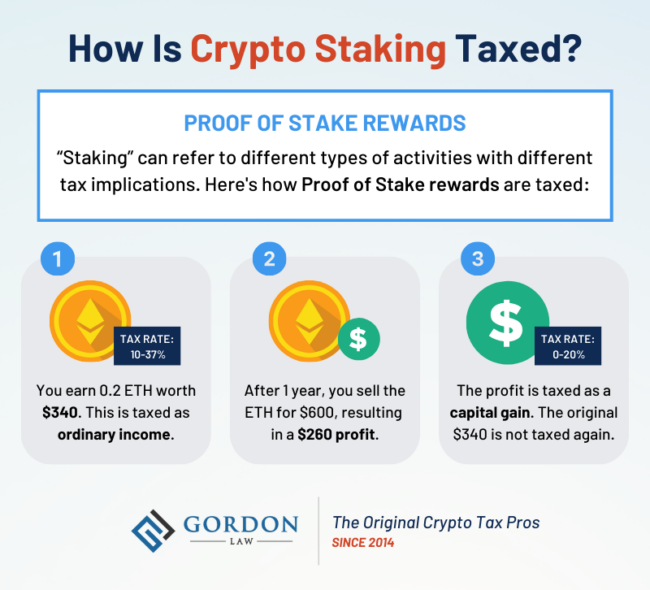
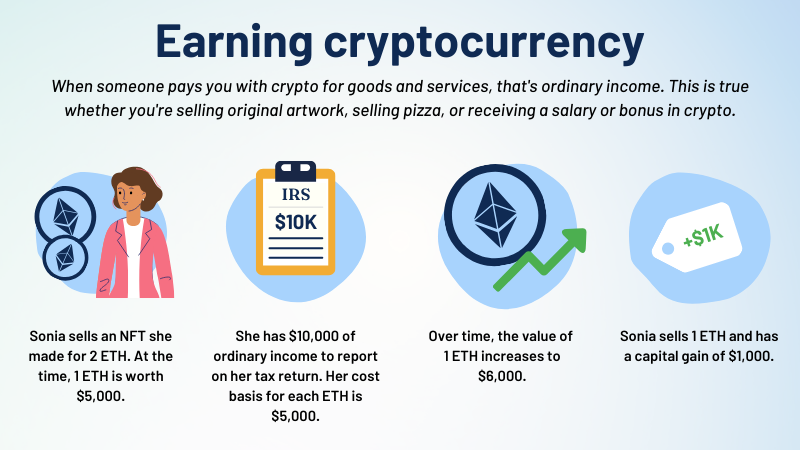
Receiving NFTs or tokens through staking, yield farming, or DeFi protocols is treated differently than a sale. The fair market value of the NFT or token at the time you receive it is considered ordinary income.
You must report this value as income on the day you gain control of the asset. This amount also becomes your cost basis. If you later sell that NFT, your gain or loss is calculated by subtracting this initial value from the sale price. This distinction ensures you pay income tax on the reward upfront, rather than deferring it until sale.
Comparison of Tax Treatments
| Transaction Type | Tax Category | Typical Rate |
|---|---|---|
| Hold ≤ 1 year (Sale) | Short-term Capital Gains | 10%–37% (Ordinary Income) |
| Hold > 1 year (Sale) | Long-term Capital Gains | 0%–20% |
| Hold > 1 year (Collectible) | Collectibles Gains | Max 28% |
| Staking/DeFi Reward | Ordinary Income | 10%–37% |
Understanding these categories prevents underreporting. Misclassifying staking rewards as capital gains can trigger IRS audits, as these are clearly earned income. Always track the date and value of receipt for any NFTs obtained through active participation in DeFi or staking protocols.
Calculate cost basis for every transaction
Tracking the cost basis for NFTs requires more than just noting the purchase price. You must account for the exact amount of cryptocurrency spent, gas fees paid on every chain, and the fair market value at the moment of acquisition for staking rewards or DeFi interactions. Because the IRS treats each NFT as distinct property, mixing up wallets or chains without a unified ledger leads to underreported gains or lost deductions.
The workflow below aggregates transaction data from multiple sources to ensure your cost basis is accurate for the 2026 tax year.

Begin by exporting CSV files or API data from every exchange and self-custody wallet where you traded, minted, or received NFTs. Include all networks (Ethereum, Solana, Polygon, etc.). The IRS requires reporting of all crypto transactions, and missing a single wallet can trigger a mismatch in your cost basis calculations. Ensure the export includes timestamps, transaction hashes, and the exact amount of native tokens or stablecoins used.
For every NFT you bought, calculate the total cost by adding the purchase price plus the gas fees paid at that specific moment. If you minted an NFT directly from a project, the cost basis is the mint price plus associated gas. Do not ignore gas fees; they are part of the cost basis and reduce your taxable gain when you eventually sell. For NFTs received as airdrops or staking rewards, the cost basis is the fair market value of the NFT at the time of receipt, which is also your ordinary income.
DeFi interactions often generate multiple taxable events. If you provided liquidity to an NFT-backed pool and received LP tokens or rewards, those rewards are taxable as ordinary income. When you later redeem those LP tokens to get your NFT back, the cost basis of the NFT is generally the value of the LP tokens at the time of redemption. Keep detailed records of these complex DeFi flows, as the IRS views them as separate transactions that must be reported on Form 8949.
When you sell, trade, or swap an NFT, you must determine which specific asset you are disposing of. The IRS allows First-In-First-Out (FIFO) or Specific Identification methods. FIFO assumes the oldest NFTs are sold first, which can result in higher short-term gains if you hold newer assets. Specific Identification is more accurate but requires meticulous tracking. Choose one method and apply it consistently across all your NFT sales to avoid audit flags.
Aggregate all your calculated gains and losses into Form 8949, Section D for long-term or Section C for short-term. Ensure the cost basis column reflects the total purchase price plus gas. The IRS begins broker reporting for crypto assets in 2026, so accurate internal records are essential. Cross-check your final numbers against the data reported by exchanges to ensure no discrepancies exist before filing.
Avoid common reporting mistakes
The 2026 filing season is shaping up to be a minefield for crypto investors, with tax experts warning that the process will be messy and fraught with pitfalls. To manage this complex landscape, you must move beyond basic sales reporting and address the complex mechanics of staking, DeFi yields, and emerging IRS forms.
Don’t ignore the 1099-DA form.
The IRS is rolling out the 1099-DA to capture digital asset transactions, but it is not a silver bullet. This form often lacks the granularity needed to calculate cost basis accurately, especially for NFTs traded across multiple marketplaces. Relying solely on broker-issued forms can lead to underreporting or inflated gains. You must cross-reference these forms with your own transaction logs to ensure every mint, sale, and swap is accounted for.
Watch out for wash-sale misconceptions.
While the wash-sale rule currently does not apply to cryptocurrencies and NFTs, this is a rapidly changing area of tax law. Assuming you can freely sell at a loss and repurchase immediately without consequence is risky. Legislative changes could retroactively affect reporting standards or future filings. Treat every disposal as a taxable event unless you have specific professional advice confirming otherwise. Do not bank on the current exemption lasting through the 2026 tax year.
Report DeFi yields as income, not capital gains.
Many users mistakenly report staking rewards and liquidity pool yields as capital gains only when they eventually sell. The IRS views the receipt of these tokens as ordinary income at their fair market value on the date received. Underreporting these yields is a common error that can trigger audits. If you earned 5 ETH in staking rewards, you must report the USD value of that 5 ETH on the day you claimed them, regardless of whether you still hold the asset.
Check holding periods for NFT sales.
The distinction between short-term and long-term capital gains is critical for NFTs. If you hold an NFT for less than 12 months, any profit is taxed at your ordinary income rate (10–37%). If held longer, it may qualify for lower long-term rates, or potentially the 28% collectibles rate if the IRS classifies it as such. Misclassifying the holding period can result in paying significantly more tax than necessary.
NFT tax: what to check next
The IRS treats most digital assets as property, meaning standard tax rules apply to your NFT activity. Whether you are selling, staking, or receiving an NFT, you likely have a tax obligation. Below are the most common questions regarding NFT taxation in 2026.
No comments yet. Be the first to share your thoughts!