

The 2026 tax landscape for digital assets
The 2026 filing season introduces a fundamental shift in how the IRS tracks cryptocurrency and digital assets. The introduction of Form 1099-DA standardizes reporting across exchanges, custodians, and decentralized finance platforms. For the first time, taxpayers will receive a formal document detailing their digital asset activity, moving the industry away from self-reported gross proceeds toward full cost basis reporting.
By mid-February 2026, most US-based taxpayers should receive their Form 1099-DA copies directly from their service providers. This form consolidates data that was previously scattered across multiple 1099-B forms or omitted entirely for DeFi interactions. The IRS will use this data to cross-reference individual tax returns, significantly increasing the scrutiny on unreported crypto gains.
The requirement to report full cost basis means you can no longer simply claim zero basis for early acquisitions. Every transaction, including staking rewards, airdrops, and DeFi yields, must be tracked with precise acquisition dates and values. This change raises the stakes for accurate record-keeping, as errors in basis calculation can lead to overpayment or unexpected tax liabilities.
Understanding market volatility is essential when calculating these costs, as asset prices fluctuate daily. The chart below illustrates recent Ethereum price action, which serves as a common benchmark for valuing many digital assets during tax reporting.
The transition to Form 1099-DA marks the end of the "wild west" era for crypto taxes. Taxpayers must now treat digital asset reporting with the same rigor as traditional securities. Failure to reconcile your internal records with the IRS-provided data can result in audits and penalties. This section outlines the specific changes and how they impact your 2026 filing obligations.
How Form 1099-DA Changes Cost Basis Reporting
The 2026 tax season introduces Form 1099-DA, a single standardized form that consolidates the reporting of digital asset transactions. For the first time, the IRS requires digital asset brokers to report both gross proceeds and cost basis on this form. This shift moves the industry away from the fragmented, gross-only reporting seen in previous years toward a system designed to automatically verify taxable gains.
2025 Gross-Only Reporting
Under the rules applied to the 2025 tax year, most digital asset brokers were only required to report gross proceeds. They did not report the original cost basis—the amount you originally paid for the asset. This created a significant compliance burden for investors. To calculate the actual tax owed, you had to maintain your own detailed records of every transaction to determine the cost basis. Without these records, the IRS would treat the entire gross proceeds as taxable gain, potentially leading to much higher tax bills than actually owed.
2026 Cost-Basis Inclusion
Starting with the 2026 tax year, the Form 1099-DA requires brokers to report the cost basis for digital assets acquired after January 1, 2025. This means the IRS will receive data showing not just how much you sold an asset for, but also what you originally paid for it. This change simplifies the calculation of capital gains for most investors, as the taxable gain is now explicitly stated on the form. It also reduces the risk of underreporting or overreporting gains due to lost or incomplete personal records.
Important Deadlines and Scope
The IRS has set a mid-February 2026 deadline for brokers to distribute these forms to investors and file them with the IRS. It is important to note that while cost basis reporting is now mandatory for assets acquired after January 1, 2025, the full scope of the new reporting rules continues to expand. Brokers must also report gross proceeds for all digital asset transactions, regardless of acquisition date, ensuring the IRS has visibility into the total volume of activity.
How staking and airdrops affect your tax basis
The IRS treats staking rewards and airdrops as ordinary income at the moment you gain control of the assets. This valuation sets your cost basis for future sales, turning what might seem like "free" tokens into taxable events with real dollar values.
When you stake ETH or similar assets, the rewards you receive are taxable as income. You must report the fair market value in USD at the time the reward is credited to your wallet. This same value becomes your cost basis. If you later sell those staked tokens, your profit or loss is calculated by subtracting this basis from the sale price.
Airdrops follow the same logic. When tokens appear in your wallet and you can trade or transfer them, they are considered received. The market price at that exact second is your income and your basis. Failing to track these entries often leads to underreported income, which the IRS flags during audits.
Because NFTs and DeFi tokens can fluctuate wildly, timing matters. A reward valued at $100 when received might sell for $50 a week later, creating a deductible loss. Conversely, a $100 airdrop could sell for $500, triggering a $400 capital gain. Accurate date and price recording is essential for compliance.
DeFi transactions and loss harvesting
Use this section to make the NFT Tax Reporting decision easier to compare in real life, not just on paper. Start with the reader's actual constraint, then separate must-have requirements from details that are merely nice to have. A practical choice should survive normal use, maintenance, timing, and budget. If a recommendation only works in an ideal situation, call that out plainly and give the reader a fallback path.
| Factor | What to check | Why it matters |
|---|---|---|
| Fit | Match the option to the primary use case. | A good deal still fails if it does not fit the job. |
| Condition | Verify age, wear, and service history. | Hidden condition issues erase upfront savings. |
| Cost | Compare purchase price with likely upkeep. | The cheapest option is not always the lowest-cost option. |
Prepare Your NFT Records for 2026 Filing
The 2026 filing season is shaping up to be a "watershed" moment for crypto taxes, described by experts as a minefield for investors. With the IRS finalizing rules around DeFi staking and NFT royalties, the margin for error has narrowed. You cannot afford to scramble for data when the deadline arrives. Use these steps to organize your records and select the right tools before the season begins.
Export transaction histories from every wallet, exchange, and DeFi protocol you used. This includes NFT mints, sales, staking rewards, and liquidity pool interactions. The IRS now receives detailed data through Form 1099-DA, so your records must match their filings exactly. Missing data creates discrepancies that trigger audits.
Separate your transactions into taxable events (sales, swaps, staking rewards) and non-taxable events (transfers between your own wallets). NFT royalties and DeFi yields are now treated as ordinary income at the time of receipt. Record the fair market value in USD at the exact moment each event occurred.

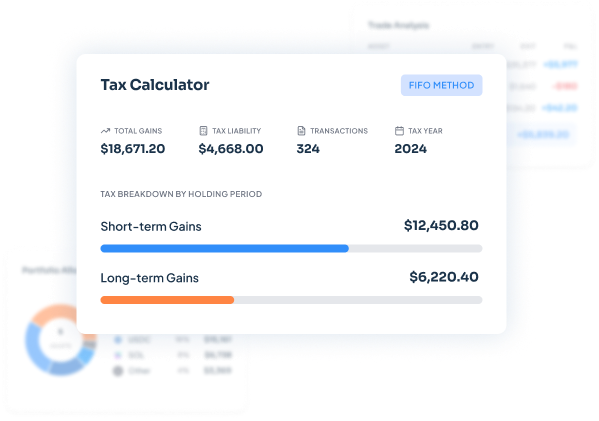
Not all platforms support the new 2026 reporting standards. Select software that automatically calculates cost basis and generates the required IRS forms. Verify that the tool supports NFT metadata tracking and DeFi protocol integrations. This step is critical for accuracy.
Compare your self-reported data against the IRS-provided Form 1099-DA. If your records show income that the IRS does not, you still must report it. If the IRS reports income you missed, correct your records immediately. Discrepancies are the primary trigger for IRS notices.

Submit your tax return by the standard April deadline. Late filings incur penalties that compound quickly. If you need more time, file for an extension, but remember that payment is still due. Keep all supporting documentation for at least three years.
No comments yet. Be the first to share your thoughts!