
2026 DeFi Tax Calculator Guide: FIFO HIFO for DEX Swaps and NFT Sales Without 1099-DA

As DeFi volumes surge past $200 billion monthly and NFT marketplaces hum with secondary sales, U. S. taxpayers face a stark reality in 2026: no Form 1099-DA for DEX swaps or NFT flips. Centralized brokers report gross proceeds starting this year, but decentralized protocols leave you holding the reporting bag. Self-tracking cost basis with FIFO as default demands precision, especially sans retroactive HIFO tweaks. This guide unpacks DeFi tax calculator 2026 essentials for DEX swap taxes FIFO HIFO and NFT sales tax reporting, spotlighting tools that handle wallet-level granularity without the 1099 crutch.

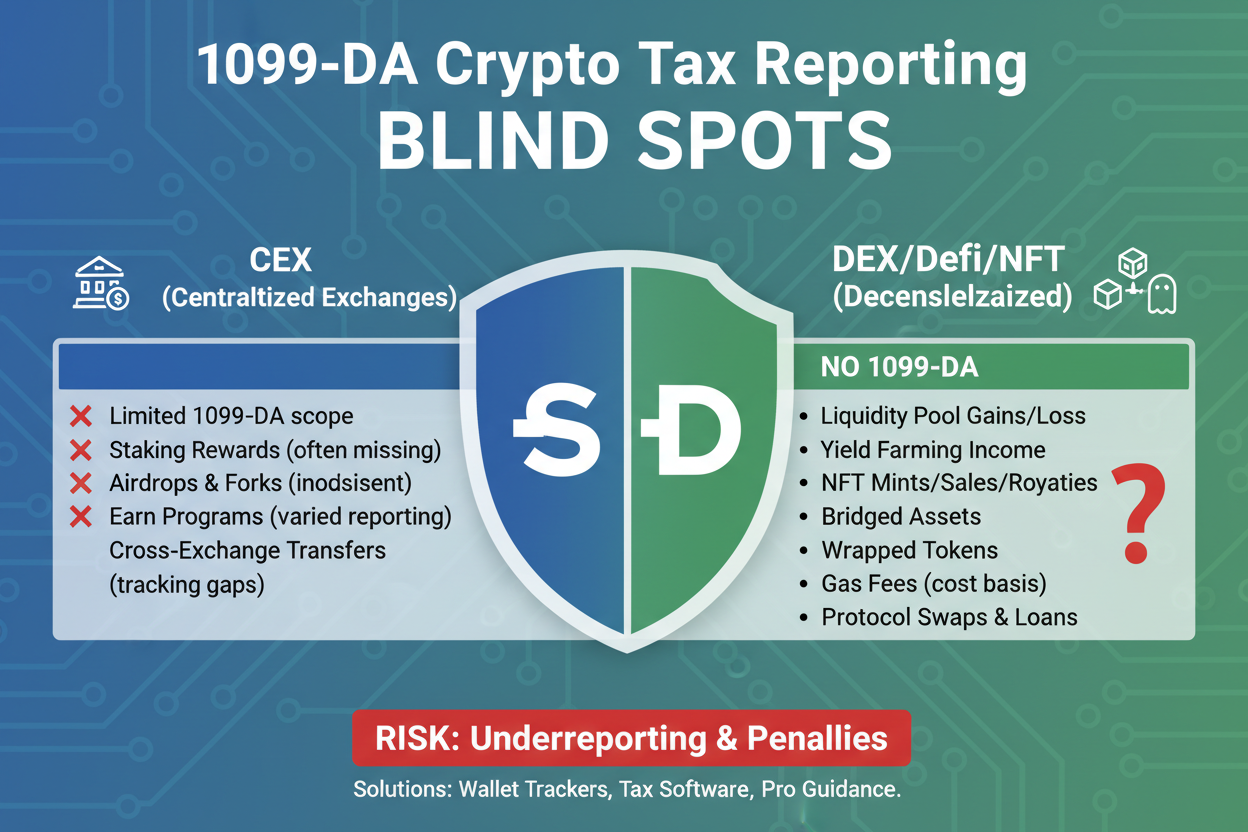
Picture this: you swap USDC for ETH on Uniswap, harvest LP rewards on Curve, then sell a bored ape derivative. Centralized exchanges like Coinbase beam your 1099-DA to the IRS by January 31,2027, for 2026 trades. DeFi? Crickets. IRS final regs confirm brokers – custodial ones – handle digital asset sales from January 1,2025. DEXs, self-custodial wallets, NFT platforms evade this net, thrusting wallet-level tracking onto you. Miss it, and audits bite harder amid rising enforcement.
1099-DA Blind Spots: Why DeFi and NFTs Demand Self-Reporting
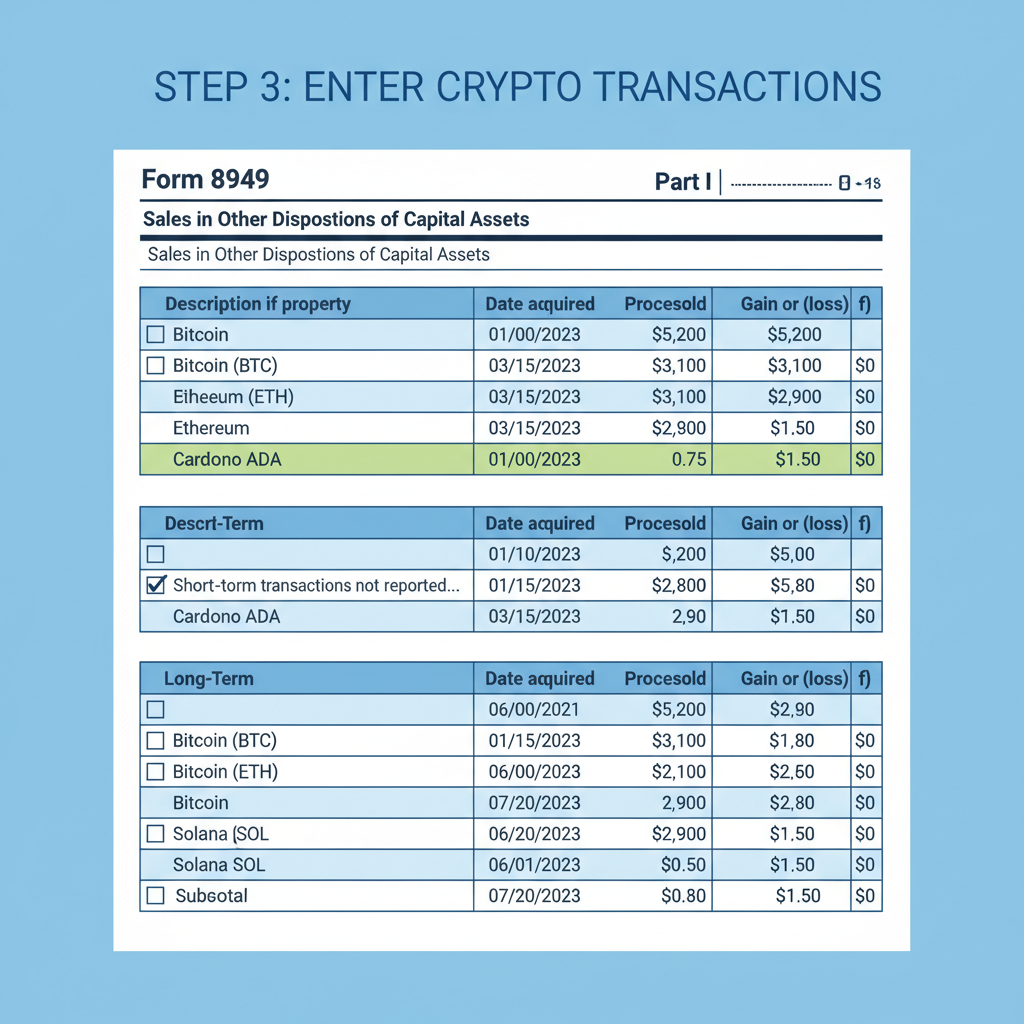
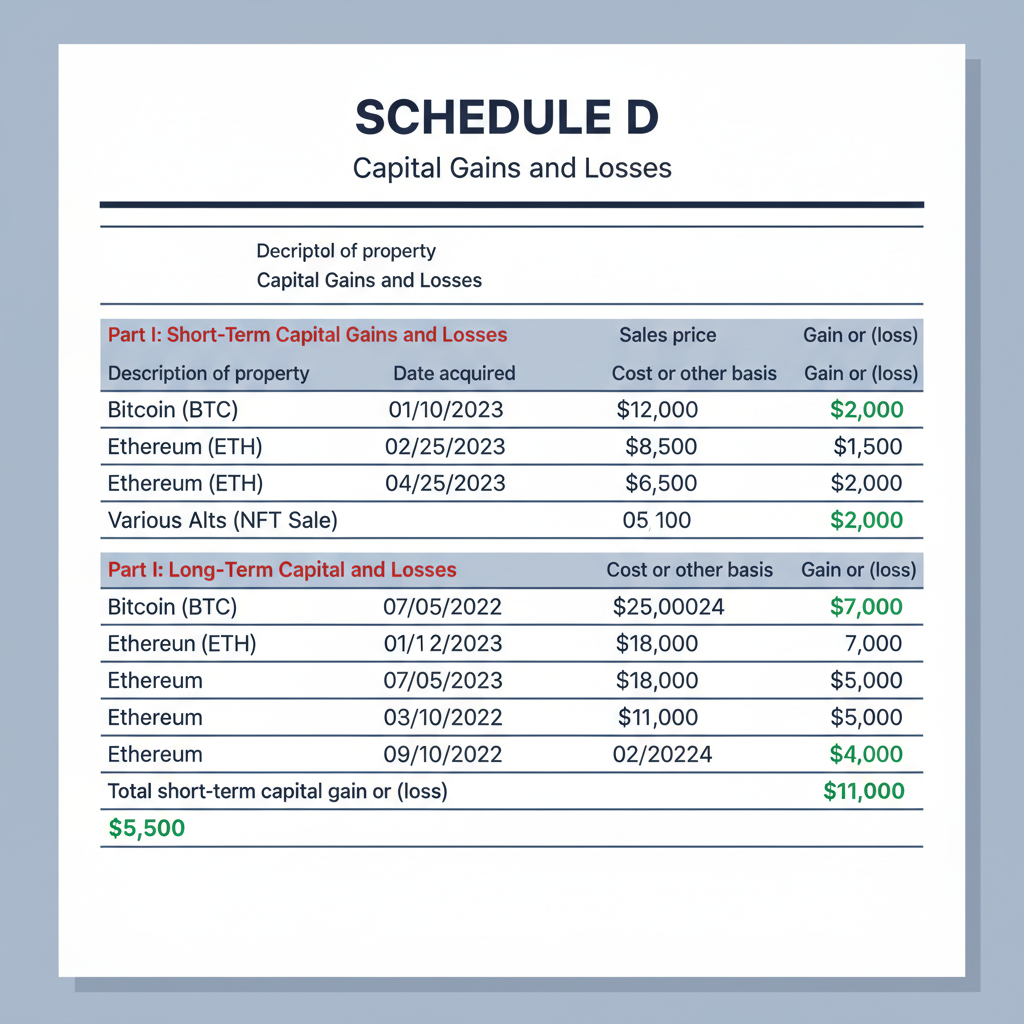
Form 1099-DA mandates gross proceeds reporting, no cost basis for 2025 transactions per IRS instructions. Brokers opt out of acquisition dates or basis if using simplified methods. Yet DeFi transactions – DEX swaps, liquidity provision, NFT mints/sales – fall outside. Updated March 2026 guidance underscores: taxpayers self-report these on Schedule D, Form 8949. No universal aggregation; per-wallet cost basis rules apply, nuking cross-wallet optimizations.
Centralized reporting eases CEX compliance, but DeFi’s permissionless nature means meticulous logs or specialized software. Charts track prices; taxes track units.
CryptoTaxCalculator. io nails it: ultimate DeFi tax guide stresses DEX/NFT self-reporting. MetaMask echoes wallet-level mandates. Without 1099-DA, crypto wallet taxes no 1099 hinge on your records. Penalties? 20% accuracy-related or 75% fraud if IRS cross-checks chain data.
FIFO Default vs HIFO: Cost Basis Strategies for DEX Swaps
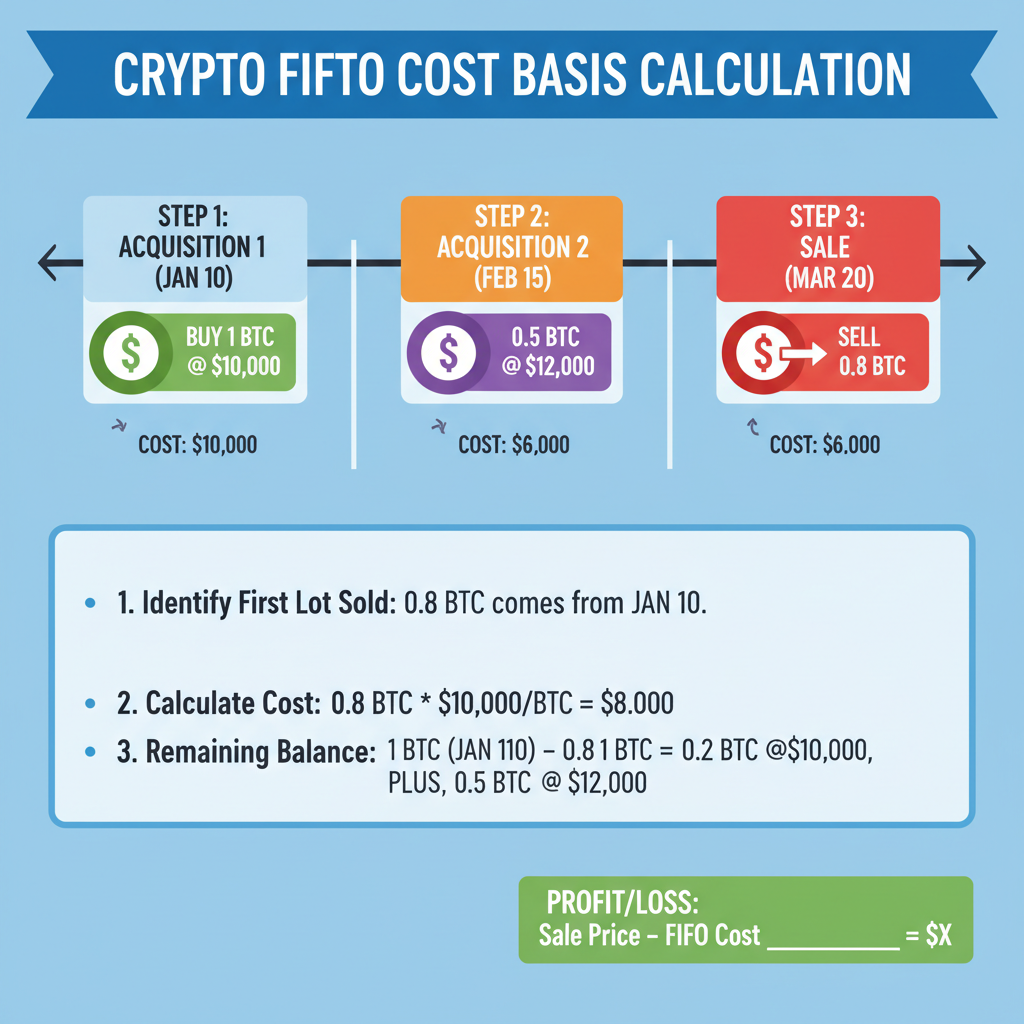
FIFO reigns as IRS default for 2026 DeFi tax calculator workflows. First-in units sell first, simplest for high-velocity swaps. HIFO – highest cost out first – slashed taxes historically by matching sales to peak buys. No more: retroactive HIFO banned; specific ID requires pre-sale identification per wallet. SpecID shines if you tag units timely, say via software noting ‘sell lot from 2025 Q1 buy at $2,500 ETH’.
DEX swap taxes FIFO HIFO pivot on method consistency. Elect once per wallet, stick to it. IRS audits favor documented elections. For NFT sales tax reporting, same rules: mint basis carries to secondary sale, FIFO unless SpecID’d.
Pre-2026, aggregate all holdings. Now, DeFi cost basis tracking silos by wallet. MetaMask wallet A: FIFO ETH swaps. Ledger B: SpecID for NFT holds. IRS guidance ties basis to account-level records, mirroring stock broker rules. Transactions cross-wallet? Treat as dispositions, triggering gains.
Real example: Uniswap V3 LP position yields UNI tokens. Harvest counts as income at fair market value, then basis for future sales. No 1099-DA, so timestamp, amounts, USD via oracles. Tools auto-fetch chain data, apply FIFO/HIFO, spit Form 8949 CSV. Precision cuts audit risk; sloppy logs invite underpayment interest at 8% annualized.
High-frequency DeFi traders, this is your edge: software reconciling EVM chains, labeling lots pre-trade. My 15 years charting markets affirm: volatility amplifies tax drag. FIFO conservative, HIFO aggressive where legal. Blend SpecID for NFTs held long, minimizing short-term hits.
Next, dive into DEX swap examples with FIFO math, then NFT specifics. Stay tuned.
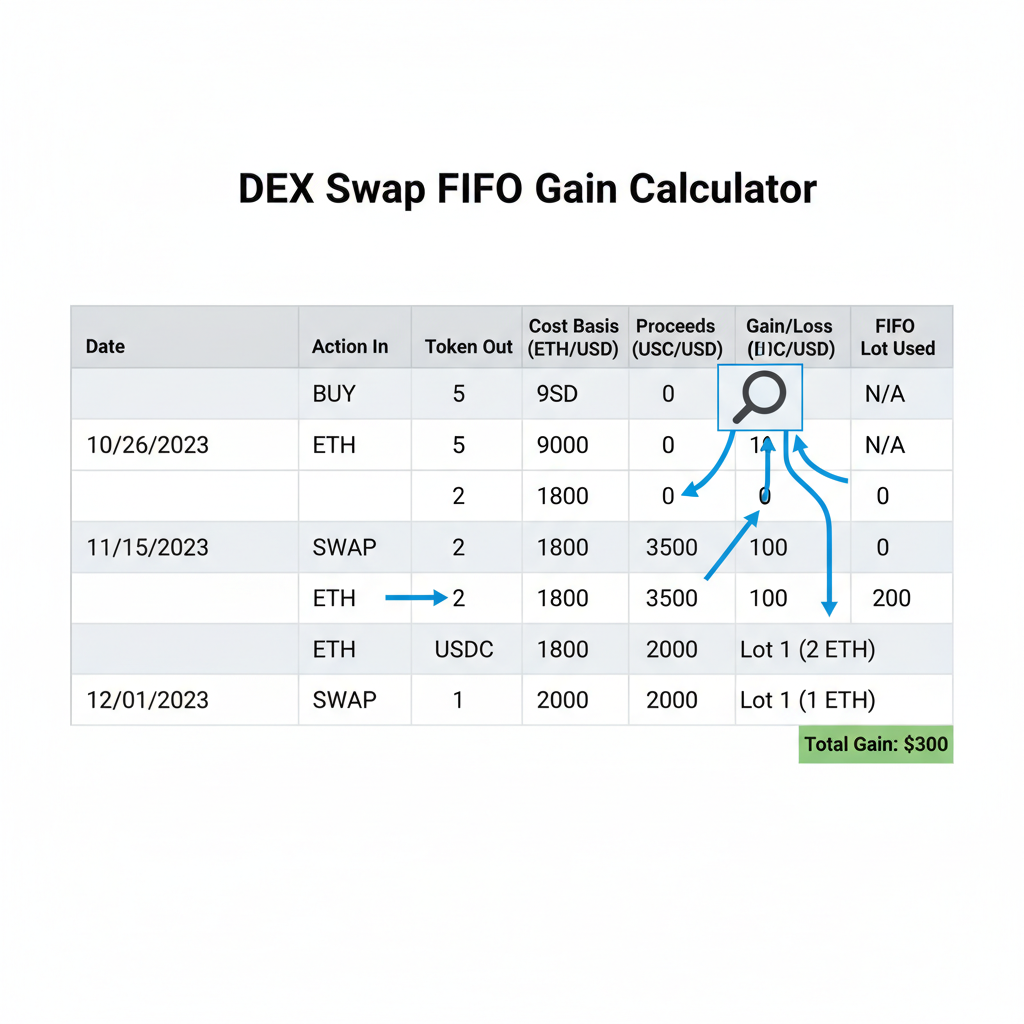
Let’s crunch numbers on a Uniswap ETH-USDC swap under FIFO. Suppose your wallet holds three ETH lots: 1 ETH bought January 2026 at $2,800, 1 ETH at March $3,200, 1 ETH at May $2,900. You swap 1.5 ETH for USDC on July 1 when ETH hits $3,500. FIFO sells the January lot first (cost $2,800), then half the March lot ($1,600 prorated). Proceeds: 1.5 ETH x $3,500 = $5,250. Cost basis: $2,800 and $1,600 = $4,400. Short-term gain: $850, taxed at ordinary rates up to 37%. HIFO would cherry-pick the $3,200 March lot first, dropping gain to $525, but pre-identification locks you in.
NFT Sales Tax Reporting: From Mint to Flip Without 1099 Safety Net
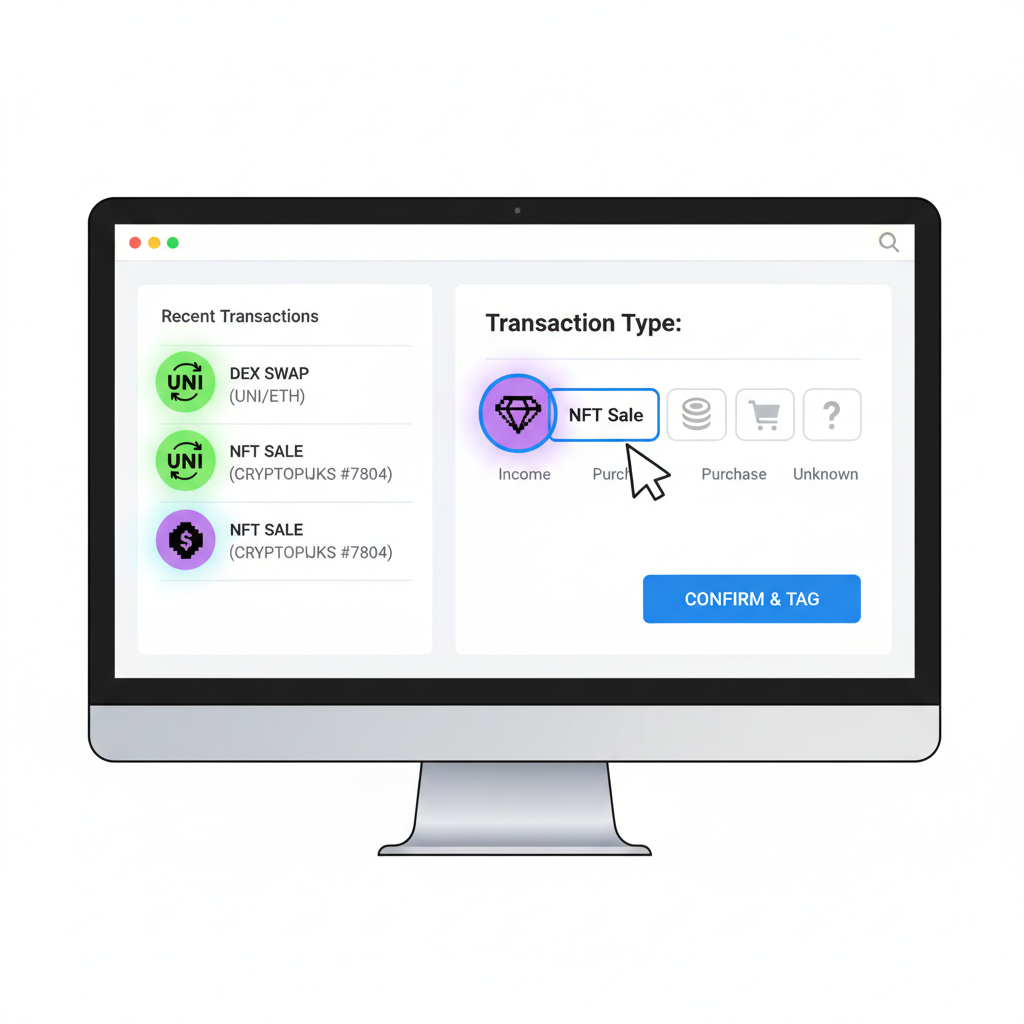
NFT sales amplify complexity. Mint a pixel punk for 0.1 ETH gas in February 2026 (basis $350 at $3,500 ETH). Floor rises; you sell June for 1 ETH ($3,800). Gain: $3,450, FIFO default since single unit. Multi-NFT wallet? FIFO sequences oldest first. Secondary royalties? Income at receipt, basis zero unless paid in NFTs. IRS DeFi transactions 2026 rules treat NFTs as collectibles: max 28% LTCG rate, but short-term ordinary. No 1099-DA from OpenSea or Blur; self-report on Form 8949, detailing wallet address, tx hash, FMV.
Opinion: NFTs reward holders, tax long-term flips. SpecID shines here; tag ‘mint lot #47’ pre-sale via software notes. My charts show NFT floors volatile; time sales post-peak basis for efficiency. Cross-chain? Bridge fees add basis layers. Tools parse Etherscan, apply methods per wallet, flag unreconciled trades.
Sample NFT Sales Table: FIFO vs SpecID Gains for Three Mints Sold in 2026 at Varying Floors
| Sale # | Sale Date | Sale Price | FIFO Basis | FIFO Gain/Loss | SpecID Basis | SpecID Gain/Loss |
|---|---|---|---|---|---|---|
| 1 | 2026-01-15 | $1,200 | Mint 1 ($400) | +$800 | Mint 2 ($1,000) | +$200 |
| 2 | 2026-03-10 | $600 | Mint 2 ($1,000) | -$400 | Mint 1 ($400) | +$200 |
| 3 | 2026-05-20 | $900 | Mint 3 ($200) | +$700 | Mint 3 ($200) | +$700 |
| Total | $2,700 | +$1,100 | +$1,100 |
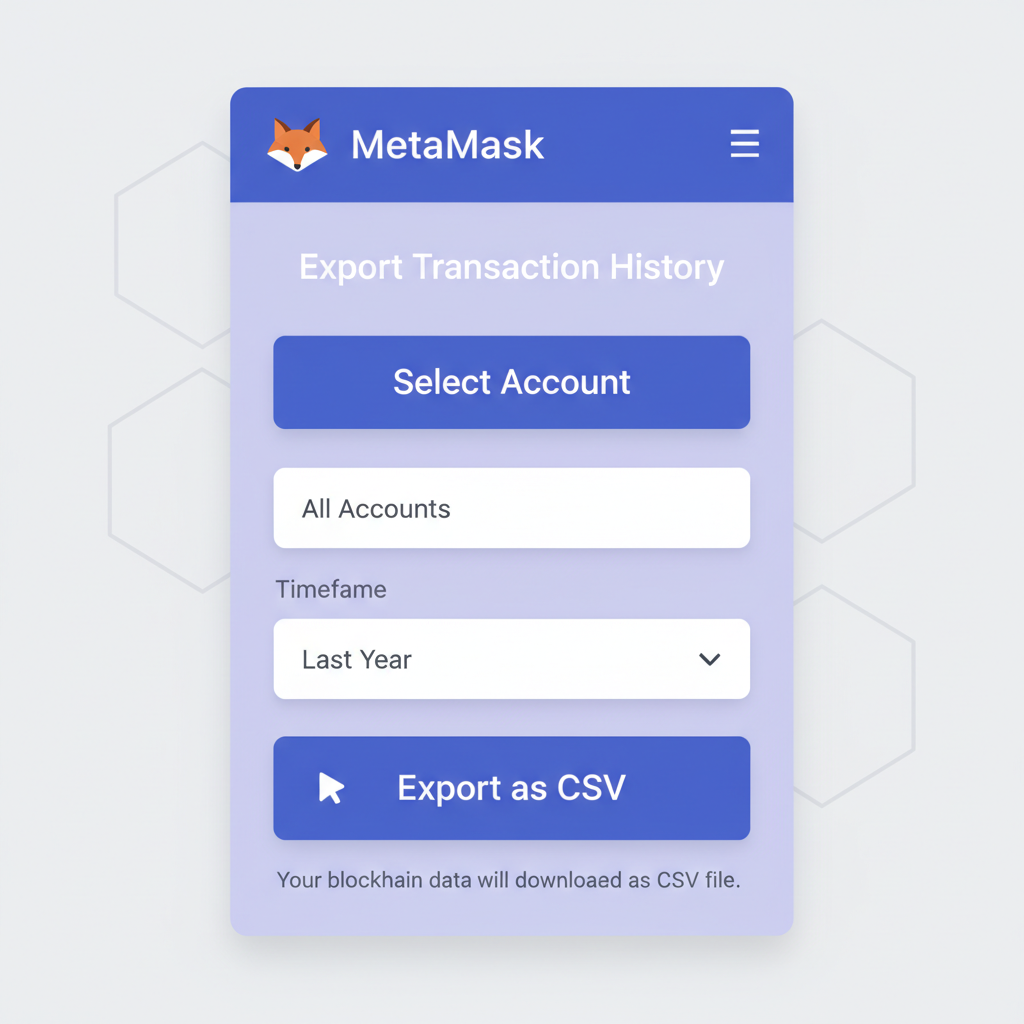
DeFi cost basis tracking demands granularity. Harvest Balancer rewards? Income event, new basis starts. Staking? Similar. Liquidity events compound: add/remove LP triggers swaps. FIFO simplifies high-volume, but SpecID optimizes if documented. Audit-proof: export wallet tx history, oracle prices, method election timestamped.
Self-Report DeFi Taxes: FIFO Guide for DEX Swaps & NFT Sales (2026 Returns)
Tools That Tame the Chaos: Precision for IRS DeFi Transactions 2026
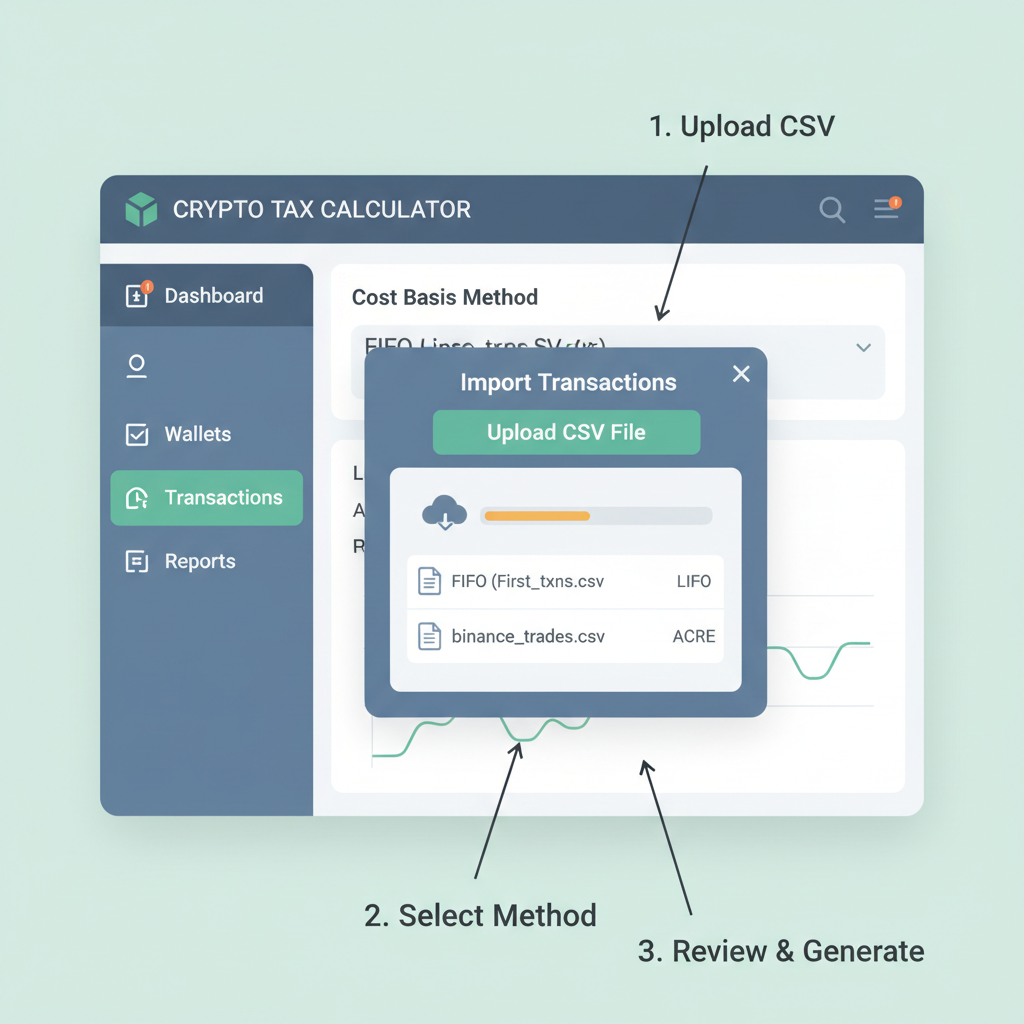
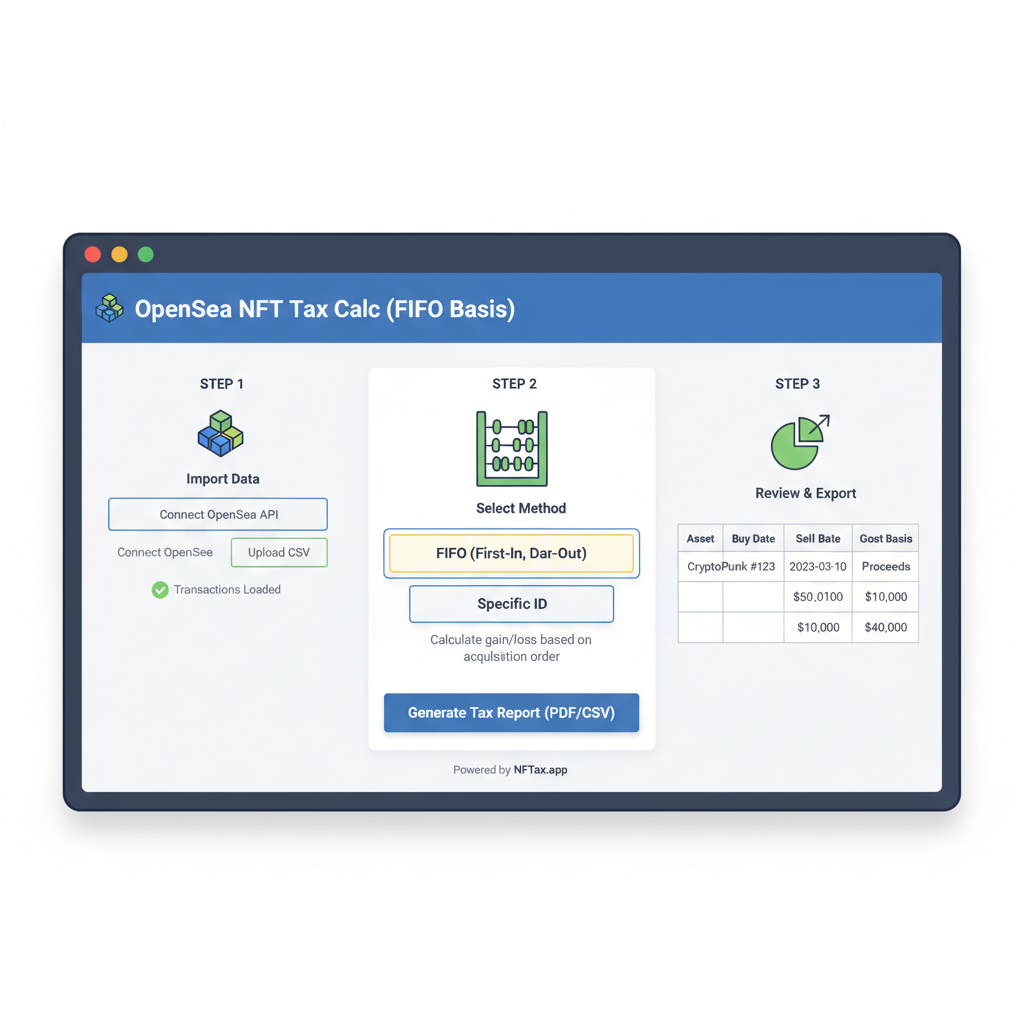
Manual spreadsheets crumble under 10,000 and tx. Real-time DeFi tax calculators ingest wallet APIs, compute FIFO per account, simulate SpecID. NFT Tax Pro exemplifies: tracks cost basis live, handles DEX/NFT blind spots, generates audit-ready CSVs. Data-driven edge: backtest methods pre-year-end, minimizing liability. My FRM lens spots patterns; software quantifies tax alpha.
Pro tip: segregate wallets by strategy. Trading wallet: FIFO for simplicity. HODL vault: SpecID long positions. Cross-transfers? Disposition at FMV, per IRS broker analogies. Enforcement ramps; chain analysis firms like Chainalysis feed IRS now. Clean books deflect scrutiny.
High-stakes DeFi demands proactive compliance. FIFO anchors reliability, SpecID unlocks savings where timed right. Layer in wallet silos, self-reported precision, and you’ve neutralized 1099-DA gaps. Scale your trades confidently; taxes follow if tracked right. Charts signal entries; ledgers secure exits.