
Classify your digital assets correctly
The IRS treats NFTs as property, not currency. This classification means you must report gains and losses on Form 8949 and Schedule D, just as you would with stocks or real estate. Before calculating your tax liability, you need to determine the specific property category of your digital asset, as the rate depends entirely on what the NFT represents.
Not all NFTs fall under the same tax bracket. The IRS distinguishes between "collectibles" and standard capital assets. This distinction is critical because it dictates the maximum long-term capital gains rate you will pay. If you classify an item incorrectly, you may underpay your taxes and face penalties during an audit.
To determine your rate, ask what the NFT allows you to do or own. If the primary value is aesthetic or speculative—such as a profile picture, a piece of generative art, or a rare trading card—it is likely a collectible. This category includes most AI-generated art and metaverse land parcels used for decoration or social status. The IRS applies the 28% rate to these items because they are tangible or intangible personal property held for investment, similar to precious metals or stamps.
Conversely, if the NFT serves as a functional key to a digital service, a membership token, or a utility asset with no significant collectible value, it may be classified as a standard capital asset. Standard capital assets benefit from the lower 20% long-term capital gains rate (plus the 3.8% net investment income tax if applicable). Utility tokens or NFTs that grant access to software or platforms generally fall into this bucket.
Start by documenting the purpose of each NFT when you acquire it. Keep records of the marketplace listing, the smart contract metadata, and any accompanying documentation. If an NFT grants exclusive access to a game or platform, note that utility. If it is marketed as a limited-edition artwork, note that collectible status. This documentation will support your classification if the IRS questions your tax return later. For more on how the IRS views digital assets generally, see the IRS Notice 2014-21.
Track cost basis for AI art and land
Accurate cost basis tracking is the foundation of compliant NFT tax reporting. Whether you are dealing with AI-generated art or virtual real estate, the IRS requires you to report the original acquisition value to determine your actual gain or loss. Skipping this step often leads to overpaying taxes or triggering audits due to inconsistent records.
Follow this sequence to calculate the adjusted cost basis for your digital assets.
Your initial cost basis is not just the price you paid. It includes all transaction fees necessary to acquire the asset. For AI art, this means adding the minting fees paid to the platform. For metaverse land, include the purchase price plus any marketplace commissions or gas fees paid during the transaction. These costs are added to your basis, reducing your taxable gain when you eventually sell.
If you invest in a metaverse parcel, such as building structures or enhancing digital infrastructure, these capital improvements increase your cost basis. You must document these additional expenses separately. When you sell the land, the total basis will include the original purchase price plus the cost of these improvements, lowering your final taxable profit.
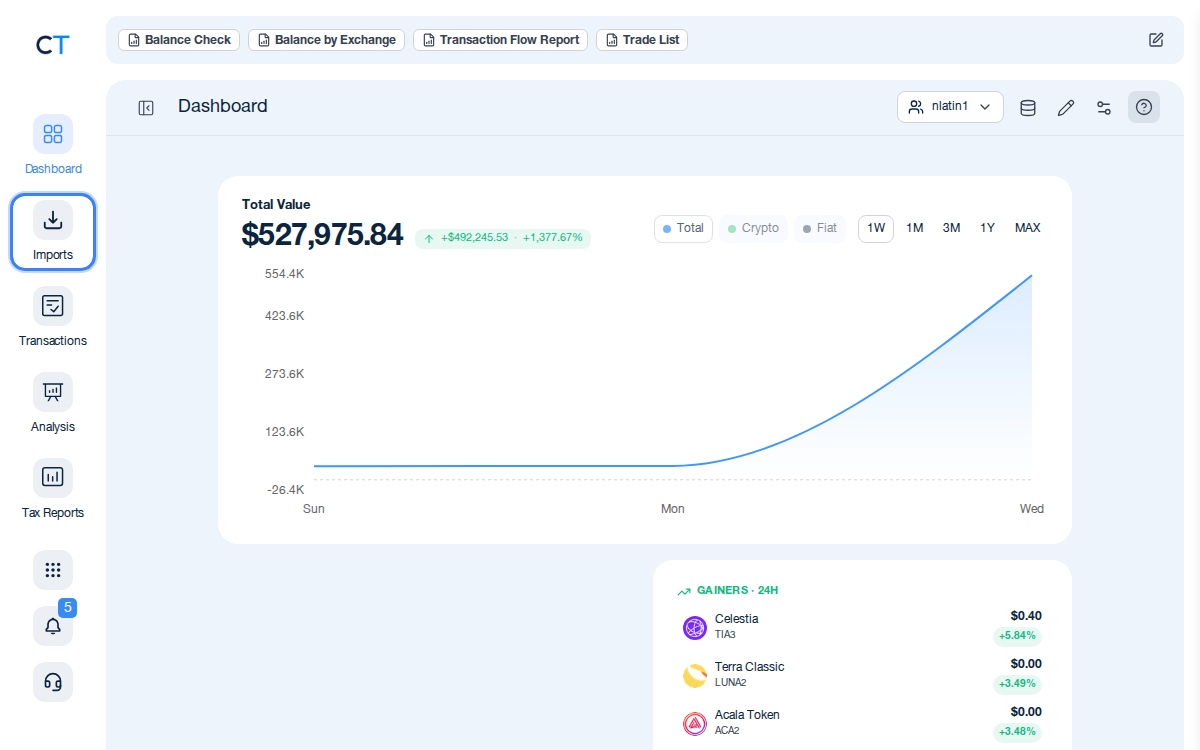
Keep detailed records of every transaction, including dates, amounts, and fees. Use crypto tax software or a spreadsheet to track these figures. This documentation is critical if the IRS questions your returns. Without clear records, you may be forced to use the highest possible basis or face penalties for underreporting.
Identify taxable NFT events
Treating every crypto interaction as a potential tax event is the first step in accurate reporting. The IRS classifies NFTs as property, meaning standard capital gains rules apply to your digital assets just as they do to stocks or real estate. This classification dictates how you calculate profit or loss when you part with an asset.
Not every blockchain action triggers a tax bill. Distinguishing between a taxable disposition and a non-taxable movement prevents costly filing errors. Below is the breakdown of common NFT activities and their tax implications.
Sales and direct trades
Selling an NFT for fiat currency or trading it for another cryptocurrency is a taxable event. You must report the fair market value of the asset at the time of the transaction against your original cost basis. If you held the NFT for more than a year, the gain qualifies for long-term capital gains rates; otherwise, it is taxed as short-term income. This applies whether you sell on a major marketplace or through a peer-to-peer trade.
Swaps and exchanges
Swapping an NFT for a different NFT or exchanging it for another digital asset is also a taxable disposition. The IRS views this as selling the original asset and buying a new one. You calculate the gain or loss based on the fair market value of the new asset received. Even if the swap feels like a simple upgrade, it triggers a tax liability that must be recorded in your ledger.
Non-taxable transfers
Moving an NFT between your own wallets—such as from a hot wallet to a cold storage device—does not create a tax event. Because you retain ownership and control of the asset, no sale or exchange has occurred. However, you must still record the transaction for audit trails. Ensure your cost basis follows the asset to the new wallet so you can calculate gains correctly when you eventually sell.
Staking and airdrops
Receiving NFTs through staking rewards or airdrops is typically considered taxable income at the fair market value of the asset when you receive it. This value becomes your new cost basis. If you later sell that NFT, you will pay capital gains tax on the difference between this basis and the sale price. While the initial receipt is taxable, the subsequent holding period starts from the date of receipt, not the original mint date.
File Schedule D and Form 8949
Reporting NFT capital gains requires precise data entry on IRS forms. The IRS treats NFTs as property, meaning every sale, trade, or exchange triggers a taxable event. For the 2026 filing season, accuracy is critical because the IRS is expanding its digital asset reporting requirements. Missing cost basis data or incorrect dates can trigger audits or automated penalties.
Follow these steps to prepare and file your Schedule D and Form 8949 correctly.
List every NFT transaction from your wallet history or exchange statements. You need the date acquired, date sold, proceeds (sale price), and your original cost basis. If you traded an NFT for another NFT, both legs of the trade are taxable events.
Use Form 8949 to report each sale or exchange. Check Box A if you received a 1099-B from a broker (like Coinbase or OpenSea) and the basis was reported to the IRS. Check Box D for other sales where basis was not reported. Enter the transaction details in columns (d), (e), and (f).
If you cannot determine your original cost basis (for example, if you created the AI art yourself), use $0 as your basis. This maximizes your reported gain but is the only option if records are lost. The IRS expects you to make a good faith effort to reconstruct records using blockchain explorers or wallet history before defaulting to zero.

Summarize the totals from Form 8949 and transfer them to Schedule D (Form 1040). This form calculates your net capital gain or loss. Short-term gains (held one year or less) are taxed as ordinary income. Long-term gains (held more than one year) receive preferential tax rates.
Include Schedule D with your Form 1040 when filing your tax return. The net capital gain or loss flows to your main tax form. Ensure your digital asset income is also reported on Schedule 1 if it was not included on Form 8949.
The 2026 filing season is expected to be complex as the IRS implements stricter reporting for digital assets. Tax experts warn that discrepancies between exchange-reported data and your personal records are the most common cause of issues. Keep detailed records of every NFT interaction to avoid penalties.
Nft tax: what to check next
Here are the most common questions about NFT taxes in 2026. These answers address how the IRS treats digital assets and what rates apply to your gains.
High-Value NFT Rates
High-value NFTs often trigger the collectibles tax bracket. Unlike stocks, which may qualify for the 20% long-term rate, NFTs are classified as collectibles by the IRS. This means the maximum long-term capital gains rate is 28%.
If you sell an NFT for a $300,000 profit after holding it for more than a year, you will owe up to 28% in federal taxes. Short-term sales (held for one year or less) are taxed at your ordinary income tax bracket, which can be as high as 37%.
Staying Compliant
The IRS has not changed its fundamental approach to virtual assets. Treat every NFT transaction—whether a sale, trade, or swap—as a taxable event. Keep detailed records of your acquisition costs and sale prices to calculate your gains accurately.
No comments yet. Be the first to share your thoughts!