
How the IRS treats NFTs
The IRS classifies NFTs as property, not currency. This means standard capital gains tax rules apply to your transactions. Whether you sell, trade, or exchange an NFT, the event triggers a taxable liability. You must report these gains or losses on your tax return just as you would with stocks or real estate.
Track every NFT transaction from purchase to sale
Accurate NFT tax reporting starts with gathering your data. Because the IRS views NFTs as property, you must report every sale, trade, or exchange. Without complete records, you risk incorrect calculations or audits. Start by collecting data from every wallet and exchange you used.
Gather exchange records
Most NFTs are bought and sold on centralized platforms like OpenSea or Blur. These platforms often provide transaction histories or tax reports. Download your full trade history for 2026. Ensure the data includes dates, asset types, and transaction amounts. This is your baseline for calculating cost basis and proceeds.
Export wallet activity
For peer-to-peer trades or transactions on decentralized exchanges, you must track activity directly from your wallet. Tools like CoinTracking or similar crypto tax software can sync with your wallet address. This captures transfers, airdrops, and staking rewards that exchanges might miss. Syncing ensures you have a complete picture of your NFT portfolio.
Verify cost basis and dates
Once you have your data, verify the acquisition date and cost basis for each NFT. The cost basis is what you paid for the NFT, including any gas fees. The holding period determines if gains are short-term (taxed as ordinary income) or long-term (taxed at capital gains rates). Keep these records organized. If you cannot find a record for a specific transaction, you may need to estimate or report it as zero-cost basis, but this carries risk.

Log into each exchange or marketplace. Navigate to the tax or reports section. Download your transaction history for the tax year in CSV format.
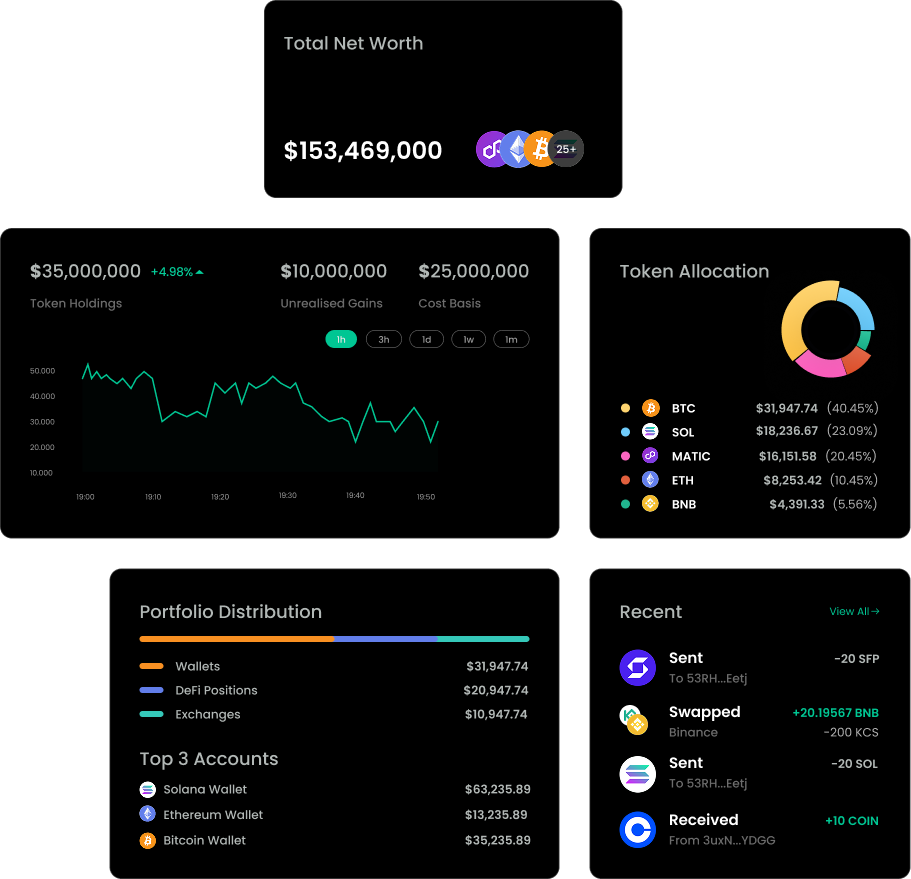
Use a tax software to import your wallet addresses. This pulls on-chain data for transfers, swaps, and mints that happened outside centralized platforms.

Compare your exchange records with your wallet data. Look for duplicates or missing transactions. Ensure cost basis includes all associated gas fees.
Determine if your NFT gains are short-term or long-term
Because the IRS treats NFTs as property, the length of time you hold an NFT before selling or trading it determines your tax rate. The dividing line is exactly 12 months. If you held the asset for one year or less, your gain is short-term. If you held it longer, it is long-term.
Short-term gains are taxed as ordinary income. This means they are added to your regular wages and taxed at your marginal income tax bracket, which ranges from 10% to 37% in 2026. Long-term gains qualify for preferential capital gains rates. Depending on your total taxable income, these rates are typically 0%, 15%, or 20%.
There is one important exception. The IRS may classify certain NFTs as "collectibles" rather than standard investment property. If your NFT falls into this category, your long-term gains are taxed at a maximum rate of 28%, regardless of your income bracket. Most profile pictures and generative art projects often fall under collectibles, while NFTs representing fractional ownership in real-world assets might not.
To calculate your liability, you must track your acquisition date and your disposal date precisely. The holding period begins the day after you acquire the NFT and ends on the day you dispose of it. Use the table below to compare how these rates apply to your specific situation.
| Holding Period | Tax Rate | Classification | Typical Use |
|---|---|---|---|
| One year or less | 10%–37% | Short-term capital gain | Most active trading |
| More than one year | 0%, 15%, or 20% | Long-term capital gain | Long-term holds |
| More than one year | 28% | Collectibles rate | Art, profile pictures, rare items |
Identify non-taxable NFT exchanges
Most NFT owners over-report their taxes because they confuse every blockchain interaction with a taxable sale. The IRS treats NFTs as property, meaning you only owe tax when you dispose of the asset in a way that realizes gain or loss. Understanding the difference between a taxable disposal and a non-taxable swap prevents costly errors on your return.
Swapping NFTs for NFTs
Exchanging one NFT for another is generally not a taxable event. If you trade your CryptoPunk for another CryptoPunk on a decentralized exchange, you have not sold the asset; you have simply swapped one form of property for another. The original cost basis and holding period carry over to the new NFT. You do not report this on your tax return until you eventually sell that new NFT for fiat currency or another crypto asset.
Gifting to Family
Giving an NFT as a gift to a family member or friend is also non-taxable for the giver. The IRS does not view a gift as a sale or exchange. However, the recipient inherits your original cost basis and holding period. If you gift an NFT worth more than the annual exclusion amount ($19,000 in 2026), you may need to file a gift tax return (Form 709), but you likely won’t owe gift tax unless you have exhausted your lifetime exemption.
Staking and Lending
Temporarily locking an NFT in a staking protocol or lending it out does not trigger a taxable event. You retain ownership of the underlying asset. However, any rewards you earn from staking or lending are taxable income at the time of receipt, valued at their fair market price. This is distinct from the NFT itself, which remains non-taxable until you sell or trade it.
Airdrops and Forks
Receiving an airdrop or a hard fork token is taxable income when you gain control of the new asset. This is treated as ordinary income at the fair market value on the day you received it. This is different from a simple swap, where no new value is created or received from an external source.
Enter NFT data on Schedule D and Form 8949
Filing your NFT taxes requires reporting every sale, trade, or exchange of digital assets on IRS Form 8949. This form acts as the detailed ledger for your transactions, which then feeds into Schedule D to calculate your total capital gain or loss.
The IRS treats most NFTs as property. When you sell an NFT for more than you paid, you realize a capital gain. If you held the asset for one year or less, the gain is short-term and taxed at your ordinary income tax rate. If you held it longer than a year, it qualifies for long-term capital gains rates, which range from 0% to 20% depending on your income.
Some NFTs may be classified as collectibles by the IRS. If so, long-term gains could be taxed at a higher 28% rate. Be sure to select the correct box on Form 8949 to reflect the nature of the transaction and the holding period.

Double-check your basis calculations before submission. Errors in cost basis reporting are a common trigger for IRS notices. Ensure your records match the data reported on Form 8949 to avoid unnecessary audits.
-
Verify short-term vs. long-term holding periods for each NFT
-
Confirm cost basis is accurate for all transactions
-
Ensure Form 8949 totals match Schedule D entries
Common questions about NFT taxes in 2026
The 2026 filing season presents a complex landscape for digital asset holders. Experts describe the current environment as a "minefield" for investors navigating the intersection of market shifts and IRS regulations [src-serp-5]. Below are direct answers to the most frequent questions regarding NFT valuation and tax liabilities this year.
No comments yet. Be the first to share your thoughts!