
Understand the 2026 reporting rules
NFTs are taxable property. The IRS treats digital assets the same as stocks or real estate. If you received, sold, or gifted NFTs during the tax year, you must report them. Ignorance of the rules is not a defense. Accurate record-keeping is essential for compliance with current regulations.
The most significant change for 2026 is the introduction of Form 1099-DA. This new form requires brokers and digital asset exchanges to report your transactions directly to the IRS. This shift moves the burden of proof from the taxpayer to the platform. You will receive detailed statements showing your gains, losses, and cost basis. These forms will likely arrive with errors or incomplete data, requiring careful reconciliation.
Tax experts warn that the upcoming filing season will be "messy" and a "minefield" for investors. The transition from self-reported data to third-party reporting creates a high risk of discrepancies. You must verify every line item on your 1099-DA against your own records. Failure to do so can trigger audits or penalties. Treat your digital asset records with the same rigor as traditional financial documents.
Gather transaction records from all wallets
With broker reporting requirements expanding and cost basis data becoming mandatory, the margin for error has vanished. You cannot rely on memory or fragmented spreadsheets. The IRS expects a complete, reconciled ledger of every NFT transaction, from minting to secondary sales.
Begin by isolating every wallet address you have ever used. This includes hardware wallets, software wallets, and any exchange accounts that held NFTs. Treat each address as a separate entity. You must export the raw transaction history from every source before attempting to reconcile. Missing even one wallet can trigger an audit for unreported gains.

Log into every centralized exchange where you traded NFTs. Navigate to the tax or transaction history section. Download the full CSV export for the 2025 tax year. Ensure you capture all deposit and withdrawal events, not just trades. These records form the baseline for your external wallet activity.
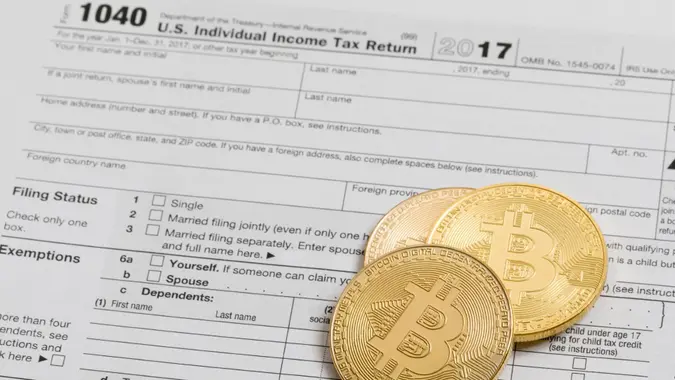
Use a blockchain explorer or a dedicated aggregator to pull the full transaction history for each non-custodial wallet. Focus on the specific NFT contract addresses you interacted with. Export this data as CSV or JSON. This step captures on-chain activity that exchanges may not report, such as direct peer-to-peer sales or minting fees.
Match your exchange withdrawals to your wallet deposits. Identify any transactions that appear in one ledger but not the other. This reconciliation phase is critical. It ensures you are not double-counting transfers as taxable events or missing sales that occurred off-exchange. Discrepancies here are the most common source of filing errors.
Do not proceed until your ledger is complete. The IRS has access to blockchain data that is public and permanent. If your records do not match the on-chain reality, you will face penalties. Treat this data collection phase with the same rigor as a financial audit.
Calculate cost basis and capital gains
Determining the correct cost basis is the foundation of any compliant NFT tax filing. The IRS treats NFTs as property, meaning every sale, trade, or swap triggers a taxable event. You must track the original purchase price and any associated transaction fees to establish your basis accurately.
Identify the holding period
Your holding period dictates whether gains are classified as short-term or long-term. If you held the NFT for one year or less, profits are taxed as ordinary income, typically ranging from 10% to 37% depending on your bracket. Holding the asset for more than 12 months qualifies for long-term capital gains rates, which are generally lower for most filers. CoinLedger confirms that short-term dispositions are subject to standard income tax rates, while long-term holdings benefit from preferential treatment.
Account for gas and transaction fees
Gas fees and marketplace commissions are not merely expenses; they are part of your cost basis. When you acquire an NFT, add the Ethereum gas fees paid at the time of purchase to the NFT's price. This total becomes your adjusted cost basis. Conversely, when you sell, deduct the gas fees and marketplace seller fees from your proceeds to calculate your net gain. Failing to include these costs results in an inflated taxable amount.
Apply the correct calculation method
You must select one accounting method for all your NFT transactions and apply it consistently. Common methods include First-In, First-Out (FIFO) and Specific Identification. FIFO assumes the earliest acquired NFTs are the first ones sold, which often results in higher short-term gains if prices have risen. Specific Identification allows you to track individual NFTs by their unique token ID, offering more precision but requiring meticulous record-keeping. Choose the method that best reflects your actual transaction history and minimizes errors.
Reconcile Form 1099-DA with your records
Broker-provided Form 1099-DA data is not infallible. It often lacks granularity regarding decentralized exchange (DEX) transactions, cross-chain transfers, or complex DeFi interactions. Relying solely on this data invites significant underreporting or overpayment.
You must treat the IRS-provided forms as a starting point, not a final authority. Compare the cost basis and gross proceeds listed on the 1099-DA against your own transaction logs. Discrepancies frequently arise from unreported airdrops, staking rewards, or NFT swaps that occurred on platforms exempt from initial broker reporting mandates. If the 1099-DA omits these, you are legally responsible for declaring them.
Conversely, if the form includes transactions you never initiated, you must flag the error. This typically happens when exchanges merge accounts or when third-party wallets are linked incorrectly. Document every variance. Your internal records must align with the IRS data to withstand potential audit scrutiny.
File Schedule D and Form 8949
Reporting your NFT transactions requires precision. You must file Form 8949 to detail each sale, exchange, or disposal of digital assets. This form breaks down your capital gains or losses by transaction date, proceeds, and cost basis.
Next, transfer the totals from Form 8949 to Schedule D of your tax return. Schedule D summarizes your net capital gain or loss. This calculation determines your final tax liability on these digital asset activities.
The IRS treats NFTs as property. Each transaction is a taxable event. Failing to report these on the correct forms can trigger audits. Ensure your records match the entries on Form 8949 exactly.
Common NFT Tax Questions for 2026
Tax regulations for digital assets continue to evolve. The following addresses specific concerns regarding creator royalties, wash sales, and the current market structure.
Do NFT creators pay taxes on royalties?
Yes. The IRS treats royalties as ordinary income, not capital gains. This distinction is critical because creators face ordinary income tax rates of up to 37%, potentially reaching 50% with state taxes. This is significantly higher than the 28% rate collectors pay on long-term gains.
Do wash sale rules apply to NFTs?
Current IRS guidance does not explicitly apply the wash sale rule to NFTs. This creates a unique tax environment where investors can sell at a loss and repurchase the same asset immediately to realize a deduction. However, this is a narrow loophole; the IRS has signaled intent to close such gaps in future legislation.
What is the future of NFT taxation?
The market is consolidating around high-value assets. In 2026, dominant projects include CryptoPunks (floor $64K+), Bored Ape Yacht Club, Pudgy Penguins, and Bitcoin Ordinals. As these assets become more established, tax reporting requirements will likely tighten, moving away from the current ambiguity toward stricter enforcement.
No comments yet. Be the first to share your thoughts!