
Classify your NFT as property or collectible
NFT Tax works best as a clear sequence: define the constraint, compare the realistic options, test the tradeoff, and choose the path with the fewest hidden costs. That order keeps the advice usable instead of decorative. After each step, pause long enough to check whether the recommendation still fits the reader's actual situation. If it depends on perfect timing, unusual access, or a best-case budget, include a simpler fallback.
The simplest way to use this section is to write down the real constraint first, compare each option against it, and choose the path that still works outside ideal conditions.
Track your cost basis and acquisition date
Accurate record-keeping determines whether you owe the IRS 10% or 37% when you sell an NFT. The difference comes down to two numbers: your cost basis and your holding period. If you lose these records, the IRS may treat your entire proceeds as ordinary income, removing any long-term capital gains benefit. You must track the exact date you acquired the NFT and the total value of all costs associated with that acquisition.

Your holding period begins the moment the transaction is confirmed on the blockchain. The IRS requires the exact date and time (UTC) of acquisition. This timestamp determines if your gain is short-term (held one year or less) or long-term (held more than one year). Short-term gains are taxed at your standard income tax rate, which can reach 37%, while long-term gains are taxed at 0%, 15%, or 20%.
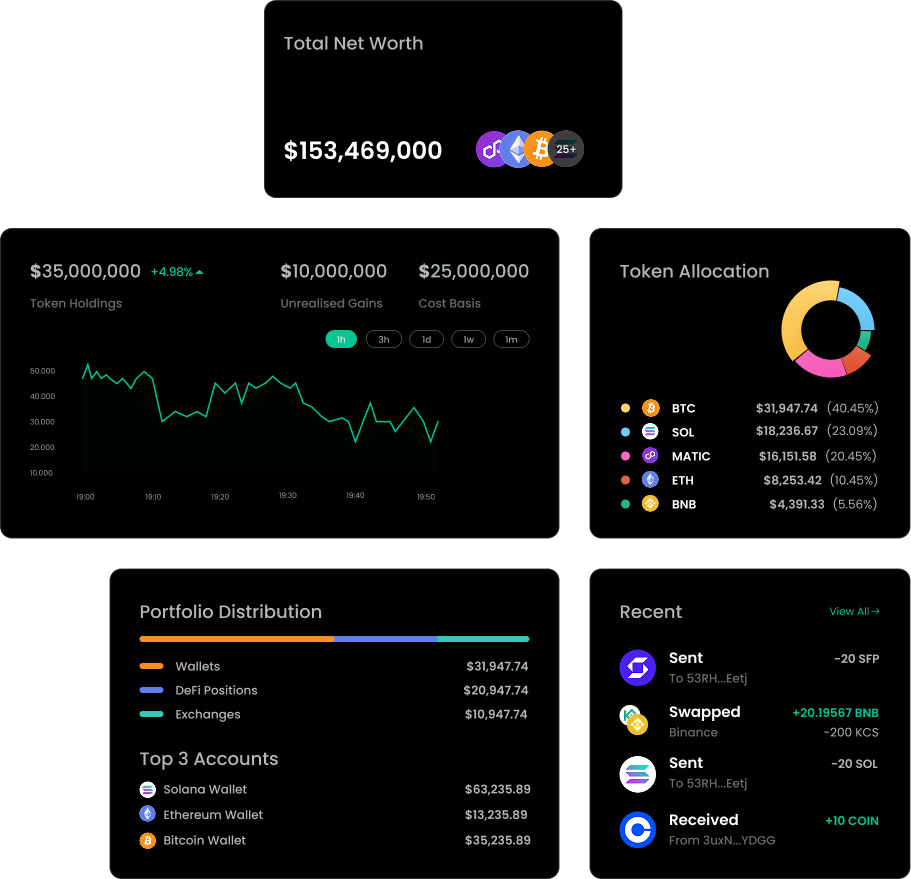
Your cost basis is not just the price you paid for the NFT. It includes the transaction fee (gas) paid to the network and any marketplace fees. If you minted the NFT yourself, the minting cost is part of your basis. If you received the NFT as income or a gift, special rules apply, but generally, your basis is the fair market value at the time of receipt. Always sum these costs to establish your true starting point.

When you sell, trade, or swap an NFT, record the date of disposal and the fair market value in USD at that exact moment. This value becomes your "amount realized." Subtract your cost basis from this amount to determine your capital gain or loss. If you hold the NFT for more than a year, you may qualify for the lower long-term capital gains rates, but only if your records prove the holding period.
Failure to maintain these records can lead to significant overpayment or audits. The IRS treats digital assets as property, meaning every transaction is a taxable event. Use a crypto tax software or a detailed spreadsheet to log every acquisition and disposal. Keep transaction hashes from the blockchain as primary evidence. Without this data, you cannot accurately report your NFT tax liability in 2026.
Calculate short-term and long-term gains
NFT Tax works best as a clear sequence: define the constraint, compare the realistic options, test the tradeoff, and choose the path with the fewest hidden costs. That order keeps the advice usable instead of decorative. After each step, pause long enough to check whether the recommendation still fits the reader's actual situation. If it depends on perfect timing, unusual access, or a best-case budget, include a simpler fallback.
| Factor | What to check | Why it matters |
|---|---|---|
| Fit | Match the option to the primary use case. | A good deal still fails if it does not fit the job. |
| Condition | Verify age, wear, and service history. | Hidden condition issues erase upfront savings. |
| Cost | Compare purchase price with likely upkeep. | The cheapest option is not always the lowest-cost option. |
Report sales on Schedule D and Form 8949
When you sell, trade, or dispose of an NFT, the transaction is taxable. The IRS requires you to report these events on Form 8949, which then feeds into Schedule D of your tax return. This process ensures your capital gains or losses are calculated correctly against your total income.
Step 1: Gather Transaction Data
Before filling out forms, collect your records. You need the date acquired, date sold, proceeds from the sale, and your cost basis (what you paid). If you acquired the NFT through minting, your cost basis is the minting fee plus any gas fees paid at that time. For trades, use the fair market value of the NFT received.
Step 2: Complete Form 8949
Enter each NFT sale on Form 8949. You will categorize each sale as short-term or long-term based on how long you held the asset:
- Short-term: Held for one year or less. Taxed at your ordinary income tax rate (10% to 37%).
- Long-term: Held for more than one year. Taxed at preferential rates (0%, 15%, or 20%).
Note that some NFTs may be classified as "collectibles" by the IRS. If so, long-term gains could be taxed at a higher 28% rate. Always verify the classification with a tax professional.

Step 3: Transfer to Schedule D
Summarize the totals from Form 8949 on Schedule D. This form calculates your net capital gain or loss for the year. If you have a net loss, you may deduct up to $3,000 against your ordinary income, with any remaining loss carried forward to future tax years.
NFT Tax Filing Checklist
-
Gather all transaction records (dates, prices, fees).
-
Determine cost basis for each NFT.
-
Fill out Form 8949 for each sale or trade.
-
Sum totals and transfer to Schedule D.
-
Review for collectibles classification (28% rate).
-
File by the April 15 deadline.
Common NFT tax mistakes to avoid
Even with the market settling in 2026, the IRS treats digital asset transactions with the same scrutiny as traditional securities. Small oversights that once flew under the radar now trigger automated audits. To stay compliant, you must track every disposal event, including those that feel like free money.
Ignoring Airdrops and Staking Rewards
Many collectors assume airdrops are tax-free gifts because they never paid for the tokens. This is incorrect. The IRS considers cryptocurrency received via airdrop as ordinary income at its fair market value on the day of receipt. If you receive an NFT airdrop valued at $500, that $500 is taxable income. Failing to report this creates an immediate discrepancy in your cost basis, leading to inflated capital gains when you eventually sell.
Misclassifying NFT Swaps as Non-Taxable
Trading one NFT for another is not a tax-free exchange. The IRS views this as a disposal of the original asset and an acquisition of the new one. You must calculate the gain or loss on the NFT you gave up based on its fair market value at the time of the swap. Misclassifying these swaps as non-taxable events is a frequent error that results in underreported income.
Mixing Up Short-Term and Long-Term Rates
Holding period matters significantly for your tax bracket. Assets held for one year or less are taxed as short-term capital gains, which aligns with your ordinary income tax rate (10–37%). If held longer than a year, they may qualify for long-term rates (0–20%). However, note that some NFTs may be classified as "collectibles" by the IRS, subjecting long-term gains to a higher 28% rate. Confusing these categories can lead to significant underpayment penalties.
Failing to Track Cost Basis
Without accurate records of what you originally paid for an NFT, you cannot calculate your true gain or loss. Many traders lose track of their basis across multiple wallets or marketplaces. Use a dedicated crypto tax calculator to aggregate transactions from all platforms. This ensures your cost basis is correctly applied, preventing you from paying taxes on money you never actually made.
No comments yet. Be the first to share your thoughts!